Buying Land in the Dominican Republic: A 2026 Investor’s Guide
The dream of owning a piece of the Caribbean often starts with a single image: a pristine plot of land, a solar en venta, in the stunning Dominican Republic. But let's be honest, turning that dream into a real asset with a clean title can feel like a huge, complicated leap, especially from overseas. You're not just buying land; you're buying into a process, a legal system, and a market you need to understand.
That’s where we come in. As Atlantique Sud, with over 25 years on the ground in Las Terrenas, we’ve guided hundreds of clients from that initial dream to holding a clear title in their hands. We’ve seen the incredible opportunities and, frankly, the pitfalls that can trip up unprepared buyers. Our goal is to give you the practical, on-the-ground intelligence you need to move forward with confidence. Buying land here isn't a fantasy. It's a completely achievable and secure investment, as long as you have the right local partner.
What This Guide Actually Covers
We're moving past the pretty brochure photos. This is your on-the-ground briefing. No fluff, just the essentials you need to make a smart move. You will learn about:
- Regional Market Differences: We'll compare the unique vibe and price points of key areas like the Samaná Peninsula, Punta Cana, and Puerto Plata.
- The Legal Process for Foreigners: A step-by-step look at how to buy property securely. We’ll cover the critical role of Law 108-05 and the title verification process that ensures your investment is safe.
- True Costs and Financing: A transparent look at the real numbers. This includes transaction taxes, fees, and powerful incentives like CONFOTUR that can save you a significant amount of money.
- Building Your Dream Villa: What does it actually cost to build? We'll give you realistic figures, from around $650/sqm for standard finishes to over $1,125/sqm for high-end luxury, plus tips for managing a project in the tropics.
By the end of this guide, you’ll have a solid framework for what it really takes to find and purchase the perfect piece of land for your home or investment.
Table of Contents
- What This Guide Actually Covers
- Decoding Dominican Land Prices: What Does a Solar Cost?
- Where to Buy Land: A Regional Breakdown
- The Legal Path to Ownership for Foreign Buyers
- From Land to Villa: Budgeting for Construction
- Understanding Taxes and Financing Options
- Frequently Asked Questions About Buying Land in the DR
Decoding Dominican Land Prices: What Does a Solar Cost?
Let’s get right to it: what does a piece of land, a solar en venta, actually cost in the Dominican Republic? The answer we give all our clients is that it depends entirely on where you decide to plant your flag. A beachfront lot in a sought-after area like Playa Bonita is in a completely different universe than a sprawling, rural plot further inland.
Grasping these price differences is the very first step toward making a savvy investment. The price per square meter is the key metric, and it's driven by a handful of critical factors.
- Proximity to the beach: It’s no surprise that beachfront or ocean-view land commands the highest premiums.
- Infrastructure: The value jumps significantly when there's easy access to paved roads, electricity, and a reliable water supply.
- Topography: Land that is flat and easy to build on is naturally more valuable than a steep, challenging hillside.
- Location: Being inside a secure, gated community with established amenities adds another layer to the price.
What Drives Buyer Decisions?
Our work with clients shows that motivations generally fall into two camps: pure investment goals and deeply personal lifestyle dreams. You have those looking for a tangible return and those looking for a return to a simpler, sunnier way of life.
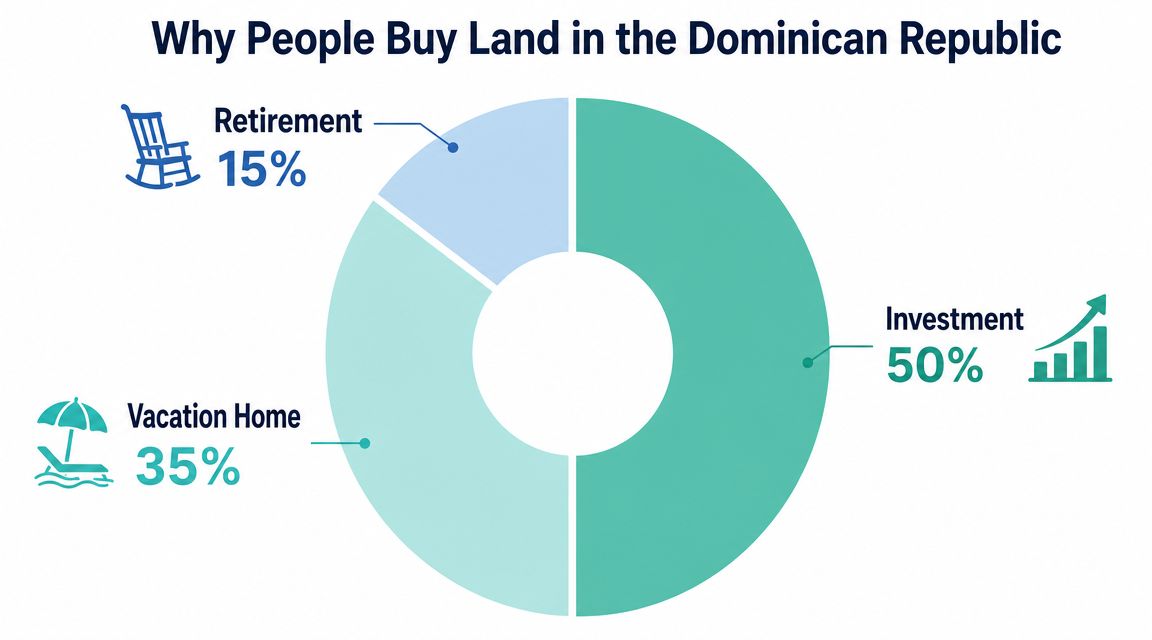
The chart below breaks down the main reasons people are searching for land for sale here in the Dominican Republic.
While building a personal vacation escape or retirement home is a powerful driver, a full 50% of buyers are acquiring land purely as an investment, banking on appreciation and future development opportunities.
The market for land in the Dominican Republic is incredibly active. It's not uncommon for us to see new listings pop up and go under contract within weeks, especially in high-demand areas. This turnover shows a healthy, dynamic market. You can get a feel for what's available right now by exploring the latest land listings in the Dominican Republic.
Our Takeaway: Price is more than a number—it’s a reflection of location, access, and potential. Don't get fixated on just the asking price. A "cheap" lot without utilities, road access, or a clean title can quickly become the most expensive purchase you ever make. Always analyze the price per square meter relative to what you're actually getting.
For example, you might discover lots in the mountains of Jarabacoa for around US$110 per square meter within a planned community. By contrast, a prime piece of land with ocean views here in Las Terrenas can easily fetch $150 to $300+ per square meter, with the price climbing the closer you get to the sand.
This variety isn't meant to be overwhelming; it's a sign of a market with opportunities for every type of buyer. When you understand what truly creates value, you’re in a much better position to recognize a property's real worth.
Where to Buy Land: A Regional Breakdown
You've got a handle on the pricing, but the big question remains: where should you actually start looking? The Dominican Republic isn't a one-size-fits-all market. Each region has its own personality, lifestyle, and investment potential. The key is to match the local market conditions to your goals.
The market for solares en venta en Republica Dominicana is no longer a secret. A quick look at international listing sites shows that the DR competes head-to-head with other major tropical destinations. This isn't a niche market anymore; it's a global one.
You can dive into a curated selection of some of the best plots right here in our guide to the Samaná real estate market.
The Samaná Peninsula: Our Home Turf
As local experts with over 25 years here, we’re obviously biased towards the Samaná Peninsula, and especially our home base of Las Terrenas. This place is special. It’s a rare mix of laid-back European style and authentic Caribbean soul, a world away from the massive all-inclusive resorts that dominate other coasts. It’s a magnet for independent travelers and expats who appreciate that difference.
Even within Las Terrenas, different neighborhoods offer completely different opportunities for land buyers:
- Playa Bonita & Playa Cosón: These are the spots for postcard-perfect, sprawling beaches and high-end luxury villas. Land here is perfect for premium residential homes with incredible views and serious rental income potential.
- Portillo & El Limón: Head to these areas for hillside lots with breathtaking panoramic ocean vistas. They're ideal if you’re looking for more privacy and a closer connection to nature, often at a more accessible price than what you'd find right on the sand.
Punta Cana and Puerto Plata: The Established Hubs
Punta Cana is the undisputed giant of Dominican tourism. The market is mature, highly developed, and revolves around massive resorts and gated communities. Land opportunities here are typically within these well-oiled machines, offering built-in security and infrastructure. It's a solid fit for an investor looking for a more turnkey, hands-off experience.
Puerto Plata, on the north coast, is making a major comeback. It's a blend of established neighborhoods and fresh development projects. With its own international airport and a long history in tourism, it offers a solid value for buyers who want a more traditional Dominican atmosphere combined with reliable infrastructure.
Our Perspective: While Punta Cana offers scale and Puerto Plata offers value, we believe the Samaná Peninsula delivers the best of both worlds. Here, you get jaw-dropping natural beauty, a vibrant international community, and incredible potential for property appreciation, all without the overwhelming crowds. This is a place for building a dream, not just a property.
The Legal Path to Ownership for Foreign Buyers
The first question we always get from international clients is, “Is my investment safe?” We can tell you with absolute confidence that yes, your investment here is secure. The Dominican Republic has a solid legal foundation that protects property rights for everyone, whether you’re a local or from halfway across the world.
Unlike in many other countries, the DR places no restrictions on foreign property ownership. You have the exact same rights and legal protections as a Dominican citizen. This policy is governed by Law 108-05 on Real Estate Registry, which established the robust Torrens system. This is a world-class framework that makes your ownership indisputable once the title is registered in your name.
The Step-by-Step Purchase Process
Buying land here is a structured process designed to protect everyone involved. We guide our clients through every step, but the main phases are refreshingly straightforward.
- Making an Offer: Once you’ve found the perfect solar (plot of land), you submit a formal written offer outlining the price, payment schedule, and any other conditions of the sale.
- Promise of Sale Agreement: After your offer is accepted, both parties sign a notarized "Promise of Sale" (Promesa de Venta). This is a binding legal contract. At this stage, a deposit, typically 10% of the purchase price, is paid to show your commitment.
- Due Diligence: This is the most critical part of the entire process. Your attorney conducts a deep-dive investigation to confirm the property title is clean, ensuring there are no hidden liens, mortgages, or outstanding legal claims tied to the land. This is non-negotiable.
Verifying Value and Title
A key piece of due diligence involves the Dirección General de Catastro Nacional. This is the government body that provides official property valuation data. Their price indices are used to set a formal cadastral value per square meter, giving you an official benchmark that goes beyond a simple asking price.
Our Commitment to Security: After more than two decades in this market, we can't stress this enough: never, ever skip due diligence. A clean "Certificado de Título" (Certificate of Title) is your absolute guarantee of ownership. We ensure every single transaction we handle is backed by a verified, unencumbered title. For an even deeper dive, check out our detailed guide to buying land in the Dominican Republic.
For any foreign buyer, getting to know the local legal system is essential, much like how one would need a guide for temporary migrants buying Australian homes to navigate that market. The good news is that here in the Dominican Republic, the system is designed to be both welcoming and secure.
From Land to Villa: Budgeting for Construction
So, you've found the perfect plot of land. That’s a huge milestone. Now for the exciting part: turning that piece of earth into a beautiful villa.
Budgeting for construction is where dreams meet reality. After more than 25 years on the ground here, we’ve learned how to give our clients the real numbers, not just hopeful estimates. The cost to build a home in the Dominican Republic isn't a single price; it’s a spectrum based on the quality of materials and ambition of your plans.
Understanding Construction Cost Tiers
To help you get a clear financial picture, we break down construction costs into three general tiers. These are the current market realities for building from scratch.
-
Standard Quality: Expect costs between $650 to $800 per square meter ($60-$75 per square foot). This gets you a solid, well-built home using reliable, good-quality local materials and finishes.
-
Mid-Range Quality: For higher-grade materials and more architectural flair, the budget will be in the $800 to $1,125 per square meter ($75-$105 per square foot) range. This is the sweet spot for many of our clients building personal vacation villas.
-
High-End Luxury: For the absolute best imported materials and completely custom finishes, costs start at $1,125 per square meter ($105+ per square foot) and go up from there.
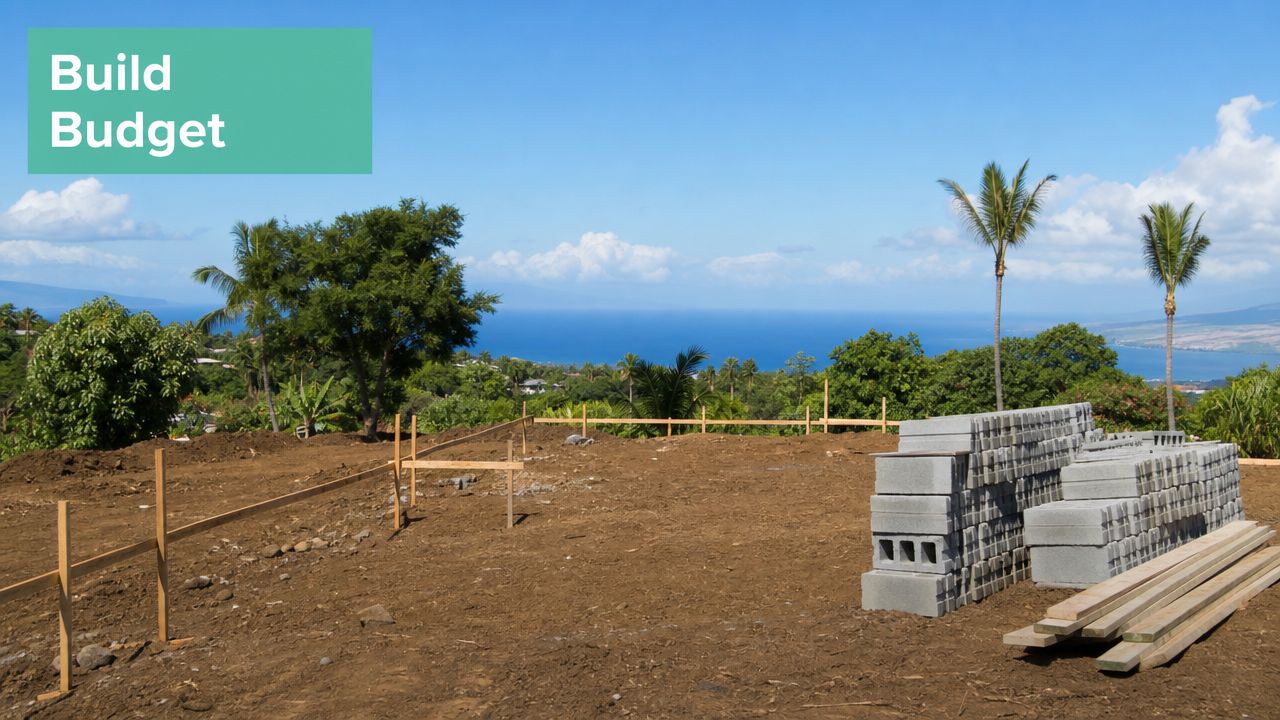
It’s critical to remember these figures are for the house itself. Your total budget must also include architectural plans, government permits, landscaping, a pool, and furnishings. These "soft costs" have to be part of the plan from day one.
Once your land is secured, the planning phase is the next adventure. While the specifics of building in the DR are unique, you can find some great general advice on getting started in articles about Building On Your Land.
Ultimately, turning a plot of land into a lasting home requires a team of trusted local professionals. We connect our clients with the best architects and builders in the area—people who know how to build for our tropical climate, ensuring your home is beautiful, durable, and safe.
Understanding Taxes and Financing Options
Let's talk about the numbers. A smart land purchase isn't just about the asking price; it's about understanding the complete financial picture. When you're looking at land for sale in the Dominican Republic, we make sure there are no surprises at the closing table.
First, you need to budget for standard closing costs. The government assesses a property transfer tax, which is 3% of the property's official appraised value. On top of that, plan for legal and notary fees, which typically run another 1-2% of the sale price. Factoring these in from the beginning is key.
Financing and Tax Incentives
When it comes to paying for your land, you have a few options. While local banks offer mortgages, securing one as a foreign buyer can be complex and often comes with higher interest rates.
A much more common and often better route is seller financing. This is where you work directly with the property owner to create a payment plan. It can be a far more flexible and faster way to secure your land.
Now, for the real game-changer: the CONFOTUR law (Law 158-01). This is a powerful piece of legislation designed to encourage tourism-related development. If your dream is to build a project that qualifies—like a rental villa—you could be eligible for incredible tax exemptions.
These benefits can include:
- Exemption from the 3% property transfer tax.
- Exemption from the annual property tax (IPI) for up to 15 years.
- Exemption from income tax on any rental income you generate for up to 15 years.
This is where a good investment becomes a truly great one. For anyone planning to build for the rental market, the long-term savings from CONFOTUR are massive and can fundamentally boost your return on investment.
Knowing how to navigate these financial details is what sets savvy investors apart. To dive deeper into how these policies could work for you, we highly recommend reading our in-depth guide on Dominican Republic taxes for real estate.
Frequently Asked Questions About Buying Land in the DR
When you're thinking about buying land overseas, a lot of questions come up. It's completely normal. Here are some of the most common ones we hear from our clients, with straightforward answers to give you the clarity you need.
Are there any restrictions on foreigners buying land in the Dominican Republic?
No, none at all. Foreigners have the exact same rights to own property as Dominican citizens. The process is transparent and backed by solid laws, mainly Law 108-05 on Real Estate Registry. This law ensures you get a secure title through the Torrens system, a very robust and reliable way to register property.
What are the main closing costs when buying a lot?
You should plan on budgeting around 5-6% of the property's purchase price for closing costs. This typically breaks down into a 3% transfer tax, notary fees of about 1%, your legal fees which run between 1-1.5%, and a few other small registration fees. We always advise our clients to get a detailed cost breakdown from their attorney beforehand so there are no surprises.
Our Strongest Advice: Never, ever move forward on a purchase without a clean "Certificado de Título" (Certificate of Title). This is the absolute non-negotiable legal proof that the seller is the true owner and the land is free from any debts or legal issues.
Is it better to buy land in a pre-approved development or an independent lot?
That really comes down to your goals. A lot inside a pre-approved community simplifies things immensely. They usually come with roads, water, and electricity already in place, plus clear building rules. On the other hand, an independent lot gives you total freedom to build your vision from scratch. Just know that you'll be the one responsible for sorting out utility connections and navigating the permitting process, which can be more complex.
How can I be sure the land title is clean and legitimate?
This is the single most important step in the entire process, and it's where having a good real estate lawyer is priceless. Your attorney's main job is to perform exhaustive due diligence. This includes pulling the official Certificado de Título from the Title Registry Office, confirming the seller is the legal owner, checking for hidden mortgages or liens (cargas y gravámenes), and verifying the official property survey (deslinde) is correctly registered.
At Atlantique Sud, we make it our business to ensure every part of the purchase is secure and transparent. If you're ready to start exploring, a great first step is to browse our current land listings. Or, if you have a specific project in mind, contact us for a personalized market consultation.
Next step: browse homes and land for sale in Las Terrenas or ask us about the gated communities.