Land for Sale That Allows Mobile Homes in Las Terrenas
You're probably in one of two situations right now. Either you've found a prefabricated or manufactured home you'd love to place in the Caribbean, or you're looking at raw land in Las Terrenas and asking the essential question first: can I put that kind of home there without running into legal or infrastructure problems later?
That's the right question.
A lot of online advice about land for sale that allows mobile homes is written for the U.S. market. It focuses on county zoning, chattel loans, park rules, and title structures that don't translate cleanly to the Dominican Republic. In Las Terrenas, the opportunity is real, but the process is different. You need to think in local terms: land use permission, clean title, access, drainage, utilities, wind exposure, and whether the lot is practical for year-round living once the home arrives.
We've handled land purchases in Las Terrenas for a long time, and the pattern is always the same. Buyers who start with the home model usually have to back up and evaluate the lot. Buyers who start with the lot but skip due diligence usually discover expensive issues later. The safest path is the opposite. Secure the right parcel first, then confirm the home, foundation, and utility plan around it.
Table of Contents
- The Manufactured Home Dream in Las Terrenas
- Your First Step Verifying Land Use and Legal Title
- Is the Land Ready Assessing Site and Utilities
- Estimating Your Total Project Cost
- Securing Financing and Closing the Deal
- Frequently Asked Questions
The Manufactured Home Dream in Las Terrenas
A manufactured home in Las Terrenas appeals to a very specific buyer. You want something more flexible than a conventional villa build, more private than a condo, and more personal than renting long term. You may be picturing a compact home tucked into greenery near El Limón, or a cleaner, more polished setup within reach of Playa Bonita, Portillo, or the road network that connects easily back into town and Pueblo de los Pescadores.
That idea isn't unrealistic here. It just needs the right land.
Why this path works here
The first reason is legal clarity. The Dominican Republic has no restrictions on foreign property ownership, and land can be found from $50/sqm, which makes the entry point more accessible than many buyers expect in the Caribbean, as noted in this overview of buying property in the Dominican Republic as a foreigner.
That changes the conversation immediately. In many island markets, foreign ownership rules, trust structures, or restricted titles complicate even a simple land purchase. Here, the issue usually isn't whether you're allowed to buy. It's whether the parcel you like is legally and physically suitable for the home you want to place on it.
Practical rule: In Las Terrenas, the dream works when the land, title, and access all line up. If one of those fails, the low entry price stops being a bargain.
The second reason is market flexibility. Around Las Terrenas, you'll find very different types of land. Some lots near Cosón or Playa Bonita appeal to buyers who want a finished residential setting and easier access to services. Other parcels toward El Limón or inland hillsides attract buyers who are comfortable trading convenience for privacy, larger footprints, or a more off-grid feel.
Where buyers usually look first
Most buyers start with scenery. Ocean view. Breeze. Quiet road. Tropical vegetation. Those are all valid preferences, but they aren't enough on their own.
What works in practice is a lot that balances lifestyle with execution. We prefer parcels where these questions can be answered early:
- Residential use: Can a dwelling of the type you want be approved there?
- Access: Can transport vehicles and installation crews reach the site in all seasons?
- Utilities: Is there a realistic path for power, water, wastewater, and internet?
- Terrain: Will you need substantial grading, retaining, drainage control, or foundation adaptation?
A buyer looking for land for sale that allows mobile homes often assumes the main challenge is finding an owner willing to sell such a parcel. In Las Terrenas, the harder part is usually selecting land that won't fight you during permitting and setup. That's where local knowledge matters more than generic listings.
Your First Step Verifying Land Use and Legal Title
Before you compare views, road frontage, or price per square meter, verify two things. First, whether the intended residential use is allowed. Second, whether the title is clean, current, and properly surveyed.
Those checks come before deposit money, before delivery planning, and before you spend time adapting a manufactured home model to the lot.
Uso de Suelo comes before design ideas
In the Dominican Republic, buyers need to confirm Uso de Suelo, meaning the permitted land use for the parcel. That sounds basic, but it's where many expensive mistakes begin.
A seller may say a lot is “good for a house.” A listing may say “ideal for construction.” Neither statement answers the actual question. You need to know whether local planning rules support your intended residential use, access pattern, setbacks, and utility approach. A manufactured home installation can fail for reasons that have nothing to do with the home itself.
The logic is similar to subdivision and planning work in other jurisdictions. If you've ever looked at how civil planning documents map access, boundaries, services, and development constraints, these NSW subdivision plans provide a useful outside reference for understanding why line-by-line site verification matters before you treat vacant land as ready to build on.
Deslinde is the title check that matters
The second pillar is Deslinde. This is not optional.
The most important title protection for a land purchase here is confirming that the property has a Deslinde under Law 108-05, which is a government-certified survey that protects against boundary disputes and title fraud, as explained in this article on property law in the Dominican Republic for foreign buyers.
A lot can look straightforward on the ground and still create problems on paper. Boundary uncertainty, outdated records, access assumptions, and unresolved ownership issues can all derail the purchase or make resale much harder later.
The safest buyers treat title review as a land selection tool, not as a final box to tick before closing.
For a deeper look at how that review works in practice, a proper property title search is one of the first legal filters we apply before a transaction moves forward.
A simple legal screening order
We don't advise clients to evaluate every lot with the same intensity from day one. A quick screening sequence saves time and reduces wasted legal cost.
- Check the intended use first. If the parcel won't support the residential outcome you want, stop there.
- Review title status early. If the title chain, survey status, or ownership position is weak, don't assume it can be cleaned up later.
- Confirm access and easements. A beautiful lot without dependable legal access is a recurring problem.
- Only then move to plans and pricing. Buyers often negotiate too early, before they know whether the asset is usable.
That sequence sounds conservative because it is. But it's cheaper to reject a lot at the document stage than after you've committed emotionally to the property.
Is the Land Ready Assessing Site and Utilities
A legally sound parcel can still be the wrong parcel. In such situations, land buying in Las Terrenas becomes practical rather than theoretical.
You aren't just buying coordinates on a title. You're buying a site that has to receive a structure, support a foundation system, carry utilities, drain properly in tropical weather, and remain livable once the excitement of the purchase is over.
A clear lot is not always a build ready lot
This matters even more for buyers coming from the U.S., where listings for land for sale that allows mobile homes often focus on permissive use language. In Las Terrenas, the harder question is whether the site will function well once occupied.
For buyers interested in self-sufficiency or reduced utility dependence, some of the same planning issues appear in other warm-weather markets. This practical piece on living off grid in Florida is a useful comparison because it highlights how power, water, waste, and resilience have to be considered together, not one by one.
A parcel near El Limón may offer space and privacy, but road access and drainage can become decisive. A lot closer to Playa Bonita or Portillo may cost more, yet save money and friction because crews, materials, and service connections are easier to coordinate.
What we inspect on the ground
A serious site review usually includes these points:
- Road access: Can a delivery truck, crane support vehicle, or construction crew reach the land without seasonal surprises?
- Water plan: Is there municipal water, a viable well strategy, or another dependable solution?
- Power connection: How far is the nearest practical grid tie-in, and what does that route look like?
- Wastewater: Will the site rely on septic, and if so, does the terrain support it?
- Drainage and soil: Does the lot shed water naturally, or will it require grading and retention work?
- Connectivity: If you'll live or work there full time, mobile and internet reliability matter more than most buyers expect.
This local building article on building a house in the Dominican Republic is useful because many of the same site-preparation realities apply even when the structure itself is manufactured rather than built block by block.
Later in the evaluation, we also look at exposure. A breezy hill can feel perfect at sunset and still need careful anchoring and engineering. As covered in this guidance on hurricane-resistant construction, in a tropical climate, planning for hurricane resistance is not an afterthought, and site selection plus foundation engineering are essential if any structure, including a manufactured home, is going to perform well in local weather conditions.
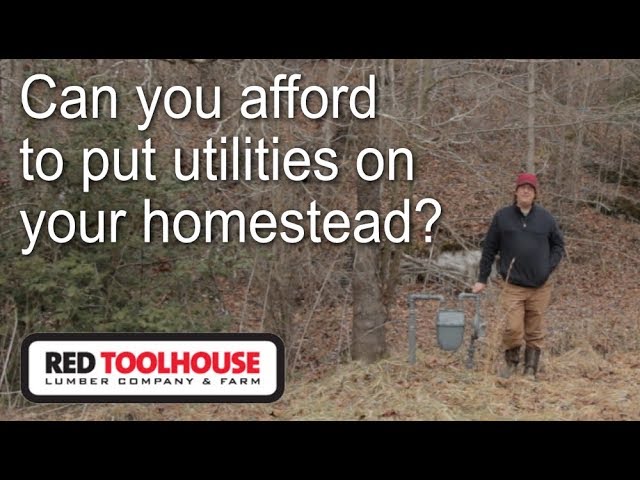
A short visual overview helps if you're still learning what to look for on site:
Estimating Your Total Project Cost
The fastest way to misjudge this type of purchase is to focus only on the asking price of the land. That number matters, of course, but it's only the opening number.
What determines whether a project feels efficient or painful is the combined cost of acquisition, legal transfer, site preparation, utilities, foundation work, and the home itself. Buyers who budget only for the lot usually end up redesigning the project halfway through.
The land price is only the opening number
One of the most common buyer mistakes in the Dominican Republic is focusing too narrowly on the land price. Buyers should also budget for a 3% property transfer tax, legal and notary fees around 1-1.5%, plus site preparation and utility connections, which can add 20-30% or more to the initial land cost, according to this explanation of closing costs and taxes for buyers in the Dominican Republic.
That point matters even more for manufactured-home projects because the parcel often needs more adaptation than a buyer expects. A lot might be legally valid and physically attractive, but still require clearing, grading, drainage control, retaining work, access improvement, or a more engineered foundation approach.
Cheap land becomes expensive land very quickly when every service has to be created from scratch.
A practical budget framework
Instead of asking “What does the lot cost?”, ask “What does the site need before a home can function there?” That budget usually breaks into the following categories:
| Cost area | What it typically includes |
|---|---|
| Acquisition | Purchase price of the land, negotiation terms, reservation or deposit structure |
| Transfer and legal | Transfer tax, legal drafting, notary work, title registration steps |
| Site preparation | Clearing, leveling, drainage shaping, access improvement, retaining if needed |
| Utilities | Electrical connection, water solution, septic or wastewater setup, telecom readiness |
| Foundation and anchoring | Structural base, tie-down or anchoring approach, engineering adaptation to terrain |
| Home delivery and installation | Transport logistics, placement coordination, final setup work |
Not every lot will stress every category equally. A more central parcel may carry a higher asking price but lower utility and access friction. A remote inland lot may look attractive on price and then require much more work before it's habitable.
For this reason, we often encourage buyers to compare parcels side by side using a full-project lens rather than a land-only lens. A slightly more expensive lot near established infrastructure can be the better value if it reduces uncertainty across four or five budget lines.
There's also a local psychology to these purchases. Buyers often stretch for the lot they love visually, then try to save money by compromising on groundwork. That's backwards. The site itself determines how comfortably the home will sit, how it handles water, and how hard it will be to maintain over time.
If you're serious about buying land for sale that allows mobile homes in Las Terrenas, reserve your contingency for the ground, not just the structure.
Securing Financing and Closing the Deal
Financing is where many foreign buyers need a reset. They assume the land purchase will be handled with a standard mortgage structure similar to their home country. Sometimes that works. Often, it doesn't work as smoothly as expected.
The better approach is to evaluate financing and closing as two separate decisions. First, how you'll pay for the asset. Second, how the transaction will be documented and completed safely.
Bank financing versus seller financing
Local bank financing does exist, but many foreign buyers find the average 12.45% mortgage rates prohibitive. In many transactions, seller financing becomes the more flexible route, especially for land purchases, as discussed in this article on financing real estate in the Dominican Republic, including mortgages, loans, and alternatives.
That doesn't mean seller financing is automatically better. It means it's often more adaptable to the nature of land purchases, particularly where the buyer wants time to finalize design, infrastructure planning, or the manufactured-home sourcing process before full build-out.
A useful comparison looks like this:
- Bank financing: More formal, more documentation, less flexible for unusual land situations.
- Seller financing: More negotiable, often easier to tailor, but the contract terms need careful legal review.
- Cash purchase: Simplest at closing, though buyers still need to protect themselves with the same due diligence.
What the closing sequence usually looks like
The closing process itself should be orderly and documented. In most land transactions, the sequence includes:
- Offer and negotiation. Agree on price, timing, what stays with the land, and any conditions tied to due diligence.
- Promise of Sale. This contract sets out the obligations, payment schedule, and conditions before final transfer.
- Escrow or controlled payment handling. Funds shouldn't move casually just because a seller is pressing for speed.
- Final deed signing. The Deed of Sale is signed before a Dominican Notary.
- Registration and post-closing follow-through. Final paperwork matters just as much as the signature day.
This is one place where a coordinated team helps. Lawyer, survey review, agent, and seller all need to be aligned on the same timeline. If one side is improvising, delays and misunderstandings follow quickly.
Frequently Asked Questions
Can I import a manufactured home into the Dominican Republic
Yes, it can be possible, but the decision should be made only after checking logistics, customs implications, site access, and local installation feasibility. Importing sounds efficient on paper, yet road geometry, unloading conditions, and utility adaptation often create primary constraints.
Some buyers end up choosing a modular or prefabricated solution that can be transported and assembled more easily in local conditions. Others still import, but only after confirming transport dimensions, foundation requirements, and the legal status of the parcel. The mistake is choosing the home first and assuming the site will adapt.
If the lot has difficult access, steep approach angles, or weak internal roads, the smartest home may be the one that arrives in smaller components.
What ongoing costs should I expect after purchase
The ongoing cost profile depends on the land, the home type, and the level of infrastructure you install. Buyers usually think first about utilities, but maintenance can matter just as much.
Expect to budget for some combination of:
- Property taxes and legal compliance: depending on the asset structure and use
- Utility service or off-grid maintenance: power, water systems, pumping, treatment, backups
- Access and drainage upkeep: especially on rural or sloped land
- Storm preparation and repairs: anchoring checks, roof inspections, water-management maintenance
- Security and caretaking: if the property won't be occupied year-round
In practical terms, the lots that are easiest to buy are not always the easiest to own. A remote parcel may feel private and inexpensive, then require regular oversight because vegetation, water runoff, and access roads need constant attention.
How long does the full process usually take
There isn't one universal timeline because these purchases depend on title quality, negotiation speed, the complexity of the parcel, and how quickly site studies can be completed.
What matters more than speed is sequence. A typical project moves best when it follows this order:
- Lot selection
- Land-use and title verification
- Site inspection and utility planning
- Negotiation and contract
- Closing
- Foundation and installation planning
- Home delivery or assembly
If one of those stages is rushed, the delay usually reappears later in a more expensive form. We've seen buyers lose weeks by pushing to close before access, water, or drainage questions were settled. We've also seen projects move smoothly because the buyer accepted a slower start and a cleaner setup.
For buyers comparing options in Las Terrenas, the best parcels are usually not the ones that only say “buildable.” They're the ones where legal status, physical conditions, and installation logistics all support the same plan.
If you're looking for land for sale that allows mobile homes in Las Terrenas and want a realistic assessment before you commit, contact Atlantique Sud Real Estate for a personalized market consultation.
See what your budget buys: explore current listings in Las Terrenas and compare the areas before you choose.