Mexico vs Dominican Republic: Beaches, Costs, Safety and Where You Should Go
Mexico and the Dominican Republic are the two heavyweight all-inclusive destinations of the Americas, and travelers weigh one against the other constantly — as do retirees, remote workers and property buyers. (If you arrived here for a Gold Cup score, wrong page — this is the travel and living comparison.) We’re based on the DR’s Samaná Peninsula, so we know one corner of this matchup intimately; we’ll still give Mexico its considerable due. Here’s the honest version, category by category.
At a glance
| Category | Mexico | Dominican Republic |
|---|---|---|
| Scale & variety | Vast — two coasts, ruins, cities, deserts | Compact — one island, easy logistics |
| Beaches | Excellent (Caribbean side), sargassum-prone | Excellent, more uncrowded options |
| All-inclusive value | Good, pricier in Riviera Maya | Best price-to-quality ratio in the region |
| Food & culture | World-class, UNESCO-deep | Lively, underrated, less famous |
| Safety perception | Mixed headlines, fine in tourist zones | Quietly steady in tourist zones |
| Cost of living | Risen sharply in expat hubs | Lower across the board |
| Foreign property ownership | Coastal land requires a bank trust (fideicomiso) | Direct freehold everywhere |
| Residency | Income thresholds have climbed steeply | Accessible, investment fast-track |
The quick verdict
Choose Mexico if you want a destination with civilizational depth: Mayan ruins an hour from your resort, cenotes, world-capital food, colonial cities, and the sheer variety only a huge country offers.
Choose the Dominican Republic if the mission is the Caribbean itself — beach quality per dollar, the region’s best all-inclusive value, shorter flights from the US East Coast, and (for the living-there crowd) easier residency and simpler property ownership.
Beaches and the sargassum question
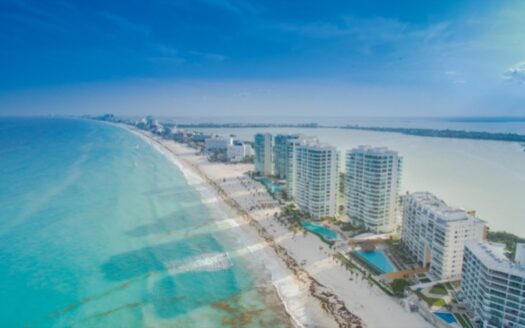
Both countries front the same Caribbean, and both Cancún–Riviera Maya and Punta Cana see seasonal sargassum seaweed in varying intensity year to year. The structural difference: Mexico’s Caribbean coastline is one concentrated 130-km strip, while the DR offers multiple distinct coasts — and its north coast, including the Samaná Peninsula, faces the open Atlantic and is largely spared the sargassum that plagues the Caribbean-facing shores. Beaches like Playa Rincón and Playa Cosón deliver the white-sand postcard with a fraction of Tulum’s crowds. On pure beach-per-dollar, the DR edges it; on beach-plus-archaeology, Mexico.
Resorts and value
Punta Cana is the all-inclusive capital of the hemisphere — more airlift, more competition, lower prices for equivalent stars. Riviera Maya resorts are superb but have priced upward relentlessly. Outside the resort bubbles, both countries hide better versions of themselves: Mexico’s Oaxaca and San Cristóbal, and the DR’s European-flavored beach towns like Las Terrenas, where French bakeries and Italian trattorias share streets with Dominican colmados.
Food and culture
Honesty clause: Mexico wins food, and it isn’t close — one of the world’s great cuisines, recognized by UNESCO. Dominican comida criolla is comfort food done right (and Las Terrenas adds a genuinely good European restaurant scene), but nobody crosses oceans for it. Culture is closer than you’d think: Mexico has the monuments, while the DR counters with living culture — merengue and bachata both born here, baseball religion, and a street-level warmth that consistently tops visitor surveys.
Safety
Mexico’s security headlines are real but geographically specific — tourist corridors like the Riviera Maya remain statistically safe for visitors, with rare high-profile exceptions. The DR generates fewer headlines; its issues concentrate away from tourist zones, and towns like Las Terrenas run notably calm. In both countries the same rules apply: stay in established areas at night, use registered taxis, don’t flash valuables. See our DR safety guide for specifics.
Living, retiring and residency: the gap is widening
Mexico was long the default Latin American retirement play, but its temporary-residency income thresholds have climbed steeply, and its famous expat hubs now carry near-US costs. The Dominican Republic’s residency remains genuinely accessible — multiple routes including an investment fast-track that resolves in months — and the cost of living sits comfortably below Mexico’s coastal expat zones. Healthcare: private care in both is good and affordable; Mexico’s top-end hospitals are stronger, the DR’s tourist-region clinics are perfectly capable. Our residency guide and retirement guide cover the DR side in detail.
Buying property: fideicomiso vs freehold
The structural difference buyers underestimate: in Mexico, foreigners cannot directly own land within 50 km of the coast — beach property is held through a fideicomiso, a renewable bank trust with setup and annual fees. In the Dominican Republic, foreigners own direct freehold title anywhere, including beachfront, with identical rights to citizens — plus CONFOTUR tax exemptions on approved projects. Add lower entry prices and stronger short-term rental yields outside the saturated zones, and the DR is the structurally simpler buy. Start with how foreigners buy property in the DR and beachfront property in Samaná.
What the same budget buys you
Numbers make the ownership comparison concrete. At current market levels, roughly:
- Around US$150,000–250,000: in the Riviera Maya, a compact condo well back from the beach (plus fideicomiso setup and annual trust fees). In Las Terrenas, a quality one- or two-bedroom condo a short walk from the sand — owned freehold, in your name.
- Around US$300,000–500,000: Tulum-zone condos with a brand name attached. In the DR, a private villa with a pool in the hills or back from one of the Las Terrenas beaches.
- Land: buildable parcels near Mexico’s Caribbean beaches are scarce and trust-encumbered. On the Samaná Peninsula, titled ocean-view and walk-to-beach land still trades at prices that allow a land-plus-build total below a Tulum resale condo.
Browse the full Las Terrenas listings catalog to calibrate against live asking prices — it’s the fastest reality check on this entire comparison.
Tulum vs Las Terrenas: the boho beach town face-off
A comparison our buyers make constantly. Both are bohemian beach towns beloved by Europeans; the resemblance ends at the bill. Tulum’s beach-zone prices now rival Miami, its beach road gridlocks in season, and sargassum can bury its postcard. Las Terrenas delivers the same formula — palm-lined beaches, boutique hotels, European cafés, yoga-and-kitesurf energy — at a fraction of the cost, with Atlantic-coast water largely free of seaweed and an established international community grown over decades rather than hyped over a few seasons. Tulum still wins on scene and cenotes; Las Terrenas wins on value, livability and the feeling Tulum sold a decade ago.
Plan with the official sources
For the Mexican Caribbean, the official Cancún tourism portal is the best starting point; for the DR, Go Dominican Republic covers every region.
Frequently asked questions
Which is cheaper, Mexico or the Dominican Republic?
For all-inclusive vacations, the DR usually wins on price-to-quality. For living, the DR is now clearly cheaper than Mexico’s coastal expat hubs, though Mexico’s interior remains inexpensive.
Which has better beaches?
Both have world-class Caribbean sand. The DR offers more variety and more uncrowded options — and its Atlantic-facing north coast largely escapes the sargassum that affects both countries’ Caribbean shores.
Is the Dominican Republic safer than Mexico?
In tourist zones both are statistically safe with normal precautions. Mexico’s risks are regional and mostly far from resorts; the DR’s profile is quieter overall.
Which is better for retirement?
Increasingly the DR: easier residency, lower coastal living costs and direct freehold property ownership. Mexico still suits retirees anchored to its culture, food and proximity to the US by land.
Is Tulum or Las Terrenas better?
Same dream, different decade: Tulum for scene and cenotes at premium prices; Las Terrenas for the affordable, livable version with better water and a real year-round community.
The bottom line
Mexico is the bigger country and the deeper civilization; the Dominican Republic is the better-value Caribbean and the easier place to actually stay. If your comparison has a relocation undertone, see the cost of living breakdown and the current properties for sale in Las Terrenas.
More head-to-head guides: Costa Rica vs Dominican Republic · Mexico vs Dominican Republic · Punta Cana vs Cancún · Jamaica vs Dominican Republic