
Dominican Republic Residency for Property Buyers in 2026
You’ve spent enough time in the Dominican Republic to stop thinking like a tourist.
Maybe it happened after a few weeks in Las Terrenas. You found your morning coffee spot, started checking listings in Playa Bonita or Cosón, and noticed that leaving after a standard stay limit no longer feels practical. At that point, the question isn’t “Can I buy here?” Foreigners can buy under the same process as locals. The question is how to align your dominican republic residency plan with the way you want to live, invest, and move in and out of the country.
That’s where many buyers get tripped up. They assume buying a property automatically gives them status. It doesn’t. Others rush into a residency path that doesn’t match their goals, then discover later that the structure of the property purchase, the timing of the application, and the type of income they can prove all matter.
In practice, the process is manageable when it’s handled in the right order. The legal side, the investment side, and the lifestyle side have to work together. If you’re buying a retirement apartment near Pueblo de los Pescadores, a rental condo in Portillo, or a villa above Cosón, the smart move is choosing the residency track that fits the purchase, not treating residency as an afterthought.
Table of Contents
- From Vacation Dream to Dominican Resident
- Choosing Your Path to Dominican Residency
- The Investor Visa Your $200K Fast Track to Residency
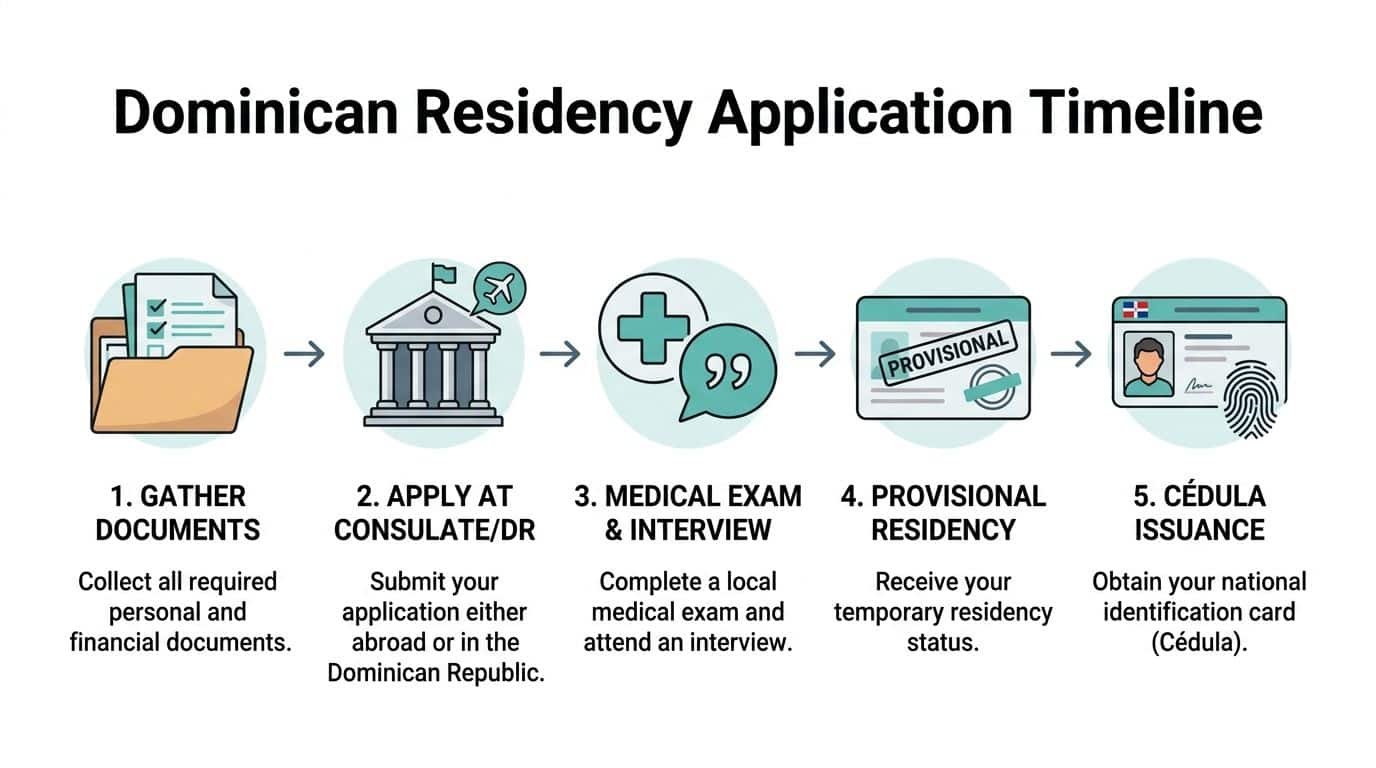
- Your Application Timeline From Document to Cédula
- How Your Property Purchase and Residency Interact
- Avoiding Common Pitfalls and Finding Your Local Team
- Your Dominican Residency Questions Answered
From Vacation Dream to Dominican Resident
The pattern is familiar. A buyer comes for a season, rents near Las Ballenas, then extends the stay and starts asking better questions. Not just about price per square meter or rental demand, but about whether they can legally stay long term, put children in school, open local accounts more easily, or spend part of the year here without relying on short tourist stays.
That shift matters because the Dominican Republic treats tourism, residency, and tax presence as separate things. A visitor can enjoy the country for a short period. Someone who wants to live here properly, retire here, or build a longer plan around a property purchase needs a legal path that matches that intention.
The good news is that the system is structured. It isn’t random, and it doesn’t have to become a paperwork spiral. What causes most stress is not the law itself. It’s bad sequencing. Buyers close on a property before understanding whether it should support an investor file, or they prepare a retiree file without checking whether their income documents fit what immigration will accept.
Buying real estate is often the easy part. Aligning the purchase with your residency strategy is where experience saves time.
In Las Terrenas, this comes up often with second-home buyers. Someone buys a condo in Playa Bonita because they want a base and occasional rental income, then later learns that ownership alone doesn’t create immigration status. Another buyer waits too long to organize apostilled records from home and loses months over documents that should have been prepared before the closing.
If you treat dominican republic residency as part of the buying plan from the beginning, the process becomes much more straightforward.
Choosing Your Path to Dominican Residency
A couple buys a condo in Las Terrenas, expecting the purchase to settle their right to stay. A few months later, they find out the deed helps, but it does not replace the residency file. Another buyer delays a reservation because she wants residency first, even though her pension documents were already strong enough to start planning both tracks together. I see both mistakes regularly.
The right residency path depends on what you want the property to do for you. A retirement home, a second home with rental income, and a larger investment property can all lead to very different filing strategies.
The three paths most foreign buyers consider
Foreign buyers usually compare three routes: pensionado, rentista, and inversionista. The legal categories matter, but the practical question is simpler. Which route is easiest to prove with the documents you already have, and which one fits the property you are buying?
The standard options include Temporary Residency as the usual starting point before permanent residency on the ordinary track, as outlined in DR Lawyer's strategic overview of Dominican residency and citizenship options. That same source lists the common financial thresholds used by buyers considering the pensionado and rentista categories.
Dominican Residency Pathways at a Glance
| Residency Type | Minimum Financial Requirement | Ideal Candidate | Key Benefit |
|---|---|---|---|
| Pensionado | $1,500 USD/month pension | Retiree with documented pension income | Straightforward fit for buyers relocating full-time on retirement income |
| Rentista | $2,000 USD/month passive income | Buyer living from investments, rentals, or other passive income | Useful for second-home owners who don’t draw a pension |
| Inversionista | US$200,000 qualifying investment | Buyer investing through real estate, business, free zones, or financial instruments | Best match when the property purchase itself is central to the residency plan |
What causes confusion is the difference between wealth and income. A buyer may own a mortgage-free apartment in Toronto or Madrid and still have trouble qualifying under pensionado or rentista if the file does not show a clear monthly income stream in the form immigration accepts.
Property type also changes the decision. A retiree buying a modest home for personal use in El Limón often has no reason to force an investor file if pension records are clean. A buyer putting serious capital into a rental-ready condo or villa often makes a better strategic choice by matching the purchase to the investment route, especially if the goal is to tie immigration status more closely to the acquisition. Buyers comparing those options usually benefit from a clear explanation of Dominican residency by investment through real estate.
Practical rule: pick the route that is easiest to document and easiest to defend if immigration asks questions.
How to choose based on your real objective
If the goal is retirement living, pensionado is usually the cleanest path. It works best when the income comes from one identifiable pension source and the records are consistent. Buyers with fragmented paperwork from multiple administrators or multiple countries often expect a simple file and end up with delays.
If the goal is flexibility, rentista is often the better fit. This category suits buyers living on dividends, lease income, trust income, or other passive sources. It can work well for owners who plan to spend part of the year in the Dominican Republic and part elsewhere, but the supporting documents need to show stable recurring income, not just assets on a balance sheet.
If the goal is to connect the property purchase directly to residency, inversionista is usually the stronger choice. That is often the case with higher-value villas, tourism-oriented condos, and structured purchases made through vehicles that support the immigration file properly.
Each path has trade-offs.
- Pensionado is clean when the pension trail is clean. If the paperwork is inconsistent, the file can slow down fast.
- Rentista works well for financially independent buyers. It is also the route where weak income proof creates the most frustration.
- Inversionista can be very efficient. It also demands good setup from the start, because a purchase contract by itself is not always enough for immigration purposes.
Buyers also need to separate immigration residency from tax presence and simple tourist stay rules. As noted in the source above, tax residency generally starts after more than 182 days per year, and the Dominican tax system generally focuses on Dominican-sourced income, with foreign earnings treated differently under that system. That matters for owners who expect to live in their property for extended periods or earn local rental income.
A retiree near Portillo usually wants legal stability and a file that is easy to maintain. An investor buying a pre-construction unit with rental intent usually cares more about how the acquisition is structured, how family members can be included, and how quickly status can follow. Buyers who compare Caribbean programs sometimes also look at options such as St Lucian Citizenship By Investment, but Dominican residency is a different decision. Here, the better question is not which headline sounds better. It is which route fits your property plan, your income evidence, and the life you intend to build in the country.
The Investor Visa Your $200K Fast Track to Residency
A buyer wires a deposit for a beachfront condo, assumes the purchase alone will carry the residency file, and then learns immigration wants the investment documented in a form the authorities can verify cleanly. That is the point where excitement turns into delay. The investor route is fast only when the property purchase and the residency strategy are set up together.
For the right buyer, this is still the clearest path. The investor category is built for people who want a real asset in the country and legal status tied to that asset, not a paper solution with no connection to how they plan to live or invest here.
What qualifies
The threshold is straightforward. The setup is where buyers make mistakes.
The investor category is based on a qualifying investment of at least US$200,000 in the Dominican Republic. For property buyers, the practical question is not whether the apartment or villa looks expensive enough. The question is whether the investment is documented, registered, and held in a way immigration will accept. A useful summary of that structure appears in this guide to Dominican Republic residency by investment through real estate.
In real transactions, I usually see three fact patterns:
- A completed purchase in the buyer’s name with clean closing documents. This is usually the strongest file.
- A purchase made through a company. This can work well, but only if the company structure, shareholding, and proof of funds are prepared with residency in mind.
- A reservation agreement or promesa de venta on a pre-construction unit. In this scenario, expectations often get ahead of the paperwork.
That last group needs special caution. A signed contract may be enough to secure the property, but it may not be enough to satisfy immigration on its own. Buyers who are purchasing pre-construction for rental income often need to decide whether to wait for stronger documentation, add other proof of investment, or choose a different residency route first.
Why property buyers choose this route
The investor visa makes the most sense when the property is not just a lifestyle purchase. It is part of a larger plan.
For an investor buying a rental unit in Las Terrenas, the benefit is alignment. The capital going into the deal supports the residency application, and the residency can make long-term ownership easier to manage on the ground. For a retiree buying a home for personal use, the investor route can still work, but it is not always the best fit if pension or passive income evidence is stronger and the property purchase is below the investment threshold.
That trade-off matters. Some clients are better served by buying first and using a retiree or rentista file. Others should structure the acquisition from day one to support an investor application, especially if they are purchasing above the threshold anyway and want family members included under the same framework.
The practical appeal is control. You are not trying to prove a lifestyle from abroad when your main economic tie to the country is already visible in the acquisition.
Another advantage is flexibility. Buyers who split time between countries, use the home part of the year, and rent it the rest of the year often prefer a residency path that matches that pattern instead of forcing the application around income categories that do not reflect how they hold wealth.
If the property is inside a qualifying tourism project, tax incentives can also improve the ownership side of the deal. That does not solve immigration by itself, but it can make the overall investment more efficient.
This overview is helpful if you want to hear a visual explanation before reviewing documents in detail:
Where buyers compare it with other Caribbean options
Some buyers compare Dominican residency with programs that grant citizenship more directly. The comparison is fair, but the objectives are different.
For readers weighing options beyond residency-first systems, this breakdown of St Lucian Citizenship By Investment gives useful context on how a classic citizenship-by-investment model differs from the Dominican approach. The Dominican Republic route is usually more attractive for buyers who want a usable property, a foothold in the country, and residency connected to a real investment rather than a stand-alone passport program.
Your Application Timeline From Document to Cédula
A residency file usually goes off track long before it reaches immigration. The problem is usually not eligibility. It is timing, expired paperwork, inconsistent names, or a property buyer who closes first and starts gathering personal documents later.
I see the same pattern often. A buyer finds the right condo or villa, sends the deposit, and assumes the residency side can be assembled afterward in a week or two. It usually cannot. Birth certificates, marriage certificates, police clearances, apostilles, and certified translations often take longer than buyers expect, especially when documents come from more than one country.
Start with the documents that are slow to replace
The safest approach is to build the residency file in your home country first, even if your purchase is already underway. For buyers comparing ownership structures, financing, and closing steps, this practical guide on buying property in the Dominican Republic as a foreigner helps put the property timeline in the right order.
A workable file usually includes:
- Civil records such as birth and marriage certificates, if they apply to your case.
- Police clearance issued in the proper form and still valid when filed.
- Financial proof that matches your residency category.
- A passport with enough validity to avoid problems mid-process.
- Investment evidence for applicants using the investor route.
One bad document can hold up the whole file.
That is why name consistency matters so much. If your passport says one thing, your police certificate uses a middle name, and your marriage certificate shows an old surname, the issue is rarely fixed at the counter in Santo Domingo. It usually means new translations, new certifications, and lost time.
Entry route matters more than buyers expect
The visa and residency category have to match the strategy behind your move. Retirees and passive-income applicants often have more flexibility because their eligibility does not depend on a completed real estate investment. Investor applicants usually need a tighter sequence because the file depends on proving the qualifying investment is real, documented, and properly structured.
Property buyers often make costly assumptions. A signed promise of sale is not the same as completed evidence of investment. If the residency plan depends on the investment route, the closing documents, payment trail, and registration record need to support that story cleanly.
Filing in the Dominican Republic is mostly administrative, but details matter
Once your documents are legalized, translated, and ready for local use, the process becomes practical. You complete the required local steps, including the medical exam, and submit the file through the proper immigration channel.
This part is less dramatic than buyers expect. It is mostly paperwork, appointments, signatures, photos, and making sure every page says what it should say. But this is also where sloppy preparation shows up.
The usual pressure points are easy to identify:
- Inconsistent names across documents
- Expired police certificates or apostilles
- Weak translation work
- Missing proof for the source and form of the investment
- Poor calendar control on filing and renewal dates
Applicants who prepare the file as one package usually move through this stage with fewer interruptions. Applicants who collect documents piece by piece, often while also furnishing a new home or managing a closing, tend to lose time on preventable corrections.
Approval is only part of the job
Temporary residency approval is not the finish line. You still need to complete the identity process, including the local ID known as the cédula. That is the document many foreigners care about in practical terms because it affects daily life. Banking, contracts, utilities, vehicle purchases, and other routine tasks become easier once you have local identification in order.
Renewals deserve the same attention as the first application. The biggest mistake I see is treating residency like a one-time filing instead of an ongoing obligation. If your category depends on an investment, the investment still has to be provable. If your passport is close to expiry, that issue needs to be fixed before renewal becomes urgent.
A realistic timeline usually works like this:
- Prepare foreign documents first
- Choose the residency path before finalizing the filing strategy
- Enter under the correct framework for your category
- Handle local medical and filing steps quickly
- Track renewal dates from the day approval is issued
Buyers who coordinate their property lawyer and immigration lawyer from the start usually avoid the worst delays. The two files are separate, but the names, dates, payment records, civil documents, and investment evidence often overlap enough that poor coordination creates problems in both places.
How Your Property Purchase and Residency Interact
Dominican republic residency can be an efficient or messy process. A property closing and a residency file are separate legal processes, but for foreign buyers they often depend on the same documents, the same names, the same source-of-funds story, and the same timing discipline.
A buyer who wants the broad purchase process in context should start with a practical overview of how to buy a property in the Dominican Republic. Once you understand the purchase mechanics, the residency strategy becomes much easier to place correctly.
Before closing versus after closing
Most buyers ask whether they should start residency before they close. The honest answer is that it depends on the route.
For pensionado or rentista applicants, you can often organize the residency file independently from the property timeline. The home is part of your relocation plan, but not necessarily the foundation of the immigration file.
For investor applicants, the property often is the foundation. In that case, the closing sequence matters because immigration won’t treat intention to invest the same way it treats a completed, provable, recognized investment. That’s why buyers relying on the investor route shouldn’t assume a reservation agreement solves the immigration side.
The best property for your lifestyle isn’t always the best structure for your residency file. Those two decisions need to be tested together.
A common example in Las Terrenas is the buyer who secures a unit off-plan in a desirable project and assumes that commitment alone will support investor residency. Sometimes the eventual structure can work. Sometimes it can’t, at least not yet. The answer depends on how the transaction is documented and whether the investment can be formally recognized when needed.
Title structure matters more than most buyers expect
Another issue is whether the property should be titled in your personal name or through a Dominican company.
Holding through a company can make sense for some investors, especially when asset management, partners, or broader estate planning are part of the picture. But if the company structure is created without regard to immigration, it can complicate the proof chain. You don’t want to discover after closing that the ownership structure makes the investor file harder to document than it needed to be.
This is also where tourism-linked projects can become attractive. A formal investment in a qualifying development can support a cleaner narrative for both ownership and residency, particularly when the buyer wants a mixed-use result: private enjoyment, rental income, and longer-term legal presence.
The key isn’t to force every purchase into an investor-residency mold. It’s to decide early whether the home is where you’ll live, or whether it is also the legal basis for your status.
Avoiding Common Pitfalls and Finding Your Local Team
The costliest residency mistakes usually don’t come from dramatic fraud. They come from ordinary shortcuts.
Mistakes that create expensive delays
The first is assuming that property ownership automatically equals residency. It doesn’t. That misunderstanding alone causes buyers to postpone legal planning until they’re already trying to stay longer than their entry status allows.
The second is using unqualified fixers. A buyer gets told that the process is easy, hands over documents, and only later learns that apostilles were wrong, deadlines were missed, or the investment wasn’t registered in the way the file required.
Other common errors show up in a predictable pattern:
- Late renewals: Applicants focus so much on approval that they forget residency is maintained through ongoing compliance.
- Weak document control: Records from different countries don’t match exactly, and nobody checks before filing.
- Bad sequencing: The property closes one way, while the immigration file needs it documented another way.
- Underestimating the support network: Buyers think one person can handle legal, translation, notarial, and real estate tasks without conflict or oversight.
That’s why DIY dominican republic residency often costs more in time than people expect. The system can be managed, but only when every professional is handling the part they know.
A file doesn’t fail only because the applicant is ineligible. It often fails because nobody owned the details from beginning to end.
Who should be on your side
At minimum, most foreign buyers need three things. A real estate attorney who understands title and migration overlap. A certified translator who works with formal filings. A notary who handles the required local instruments correctly.
For buyers in Las Terrenas, many also need a real estate point person who can coordinate the moving parts without pretending to be the lawyer. That’s where a local agency can be useful if it works inside a vetted professional network. One practical starting point is reviewing established Dominican Republic realtors in Las Terrenas who regularly work with foreign buyers and cross-border transactions.
We’ve seen the best outcomes when each person stays in their lane. The attorney handles due diligence and immigration filing strategy. The translator handles official language compliance. The notary handles formalization. The property side coordinates transaction timing, developer communication, and property logistics.
When buyers blur those roles, things get sloppy. When the team is clear, the process tends to stay calm.
Your Dominican Residency Questions Answered
Can I legally work with residency
Yes, but the determining factor is the kind of work you plan to do.
Residency removes the basic immigration problem that applies to tourists. It puts you in a position to live in the country, open accounts more easily, sign contracts with less friction, and operate on firmer legal ground. That matters for buyers who want more than a holiday home.
The next question is whether you plan to take local employment, run a company, consult remotely, or hold investments. Those situations are treated differently in practice. Some professions still require local licensing or recognition of foreign qualifications. For many foreign buyers, the common model is owning rental property, managing a business, or living from retirement or offshore income. Residency supports that structure, but it does not replace sector-specific rules.
What is the tax difference between legal residency and tax residency
Legal residency and tax residency are separate issues, and mixing them up causes expensive mistakes.
A buyer can hold Dominican residency without automatically becoming a Dominican tax resident. As noted earlier in the article, tax residency is generally tied to time spent in the country, and the practical tax treatment often depends on whether the income is Dominican-sourced or generated abroad. That distinction matters a great deal if you are buying property as an investor rather than relocating full time.
Here is the practical version. A retiree who lives part of the year in Las Terrenas and lives on foreign pension income has a different tax profile from an investor who owns two condos and collects local rental income every month. Both may qualify for residency. Their reporting, planning, and risk exposure are not the same.
This is one of the places where the property purchase and the residency strategy meet directly. If the apartment is only a lifestyle purchase, the tax analysis is usually simpler. If the property is part of an income plan, tax advice should be part of the conversation before closing, not after.
Do I need to live in the country full time to keep residency
Usually, no.
For many investor clients, that flexibility is one reason the residency route makes sense. Some buyers want a home base in the Dominican Republic, visit seasonally, keep a local bank relationship, and preserve the option to spend more time here later. That can fit the residency framework.
Citizenship is a different goal. A person who wants naturalization later should plan around real presence, clean records, and a file that shows genuine ties to the country. Buyers who tell me, “I want residency for flexibility,” need one strategy. Buyers who say, “I want the shortest credible path to a passport,” need another. The mistake is assuming those are the same plan.
What happens if my application is denied
A denial usually points to a problem in the file, the category selected, or the way the supporting evidence was presented.
In practice, I look at three things first. Was the applicant eligible under the category used. Were the documents prepared, translated, legalized, and filed correctly. Did the evidence match the story being told. A buyer applying through an investment route, for example, needs a file that clearly proves the investment, not just a general statement that a property was purchased.
Some denials can be corrected with cleaner paperwork and a refile. Others require a different approach, especially if the original residency path did not match the buyer’s real objective.
Treat a denial like a technical review, not a personal setback.
If you’re weighing a property purchase and dominican republic residency at the same time, the safest next step is a coordinated plan, not two separate conversations. Contact Atlantique Sud Real Estate to discuss your buyer profile, the property type you’re considering, and which residency route fits that purchase most cleanly.