Top 7 Best Caribbean Islands to Live in 2025: An Investor’s Guide
The dream of Caribbean living is evolving. For savvy international investors, retirees, and vacation home buyers, the decision is no longer just about pristine beaches. It's about financial stability, lifestyle quality, and securing a valuable asset in a growing market.
Weighing the Caribbean against Central America too? See our full Costa Rica vs Dominican Republic comparison — beaches, costs, residency and real estate head-to-head.
As Atlantique Sud Real Estate, with over 25 years of specialized experience in the Las Terrenas property market, we've guided countless clients through this journey. Many begin by searching for the "best Caribbean islands to live" but quickly realize the nuances of residency, tax law, and property rights are what truly define a successful investment.
This guide will objectively compare the top contenders, providing the data you need on everything from real estate costs to residency requirements. We will then reveal why the Dominican Republic, and specifically the Samaná Peninsula, presents an unparalleled opportunity for today's discerning buyer.
1. Barbados: Stability and 'Little England' Charm
Often called 'Little England,' Barbados stands out as one of the best Caribbean islands to live on due to its political stability, robust infrastructure, and high standard of living. This coral island nation blends classic Bajan culture with modern conveniences, creating a familiar yet exotic environment for expatriates. Its long-standing reputation for safety and development attracts a sophisticated community of residents and investors.
The island's well-established expat communities, particularly along the prestigious West Coast and in the lively St. Lawrence Gap, offer a seamless transition for newcomers. The capital, Bridgetown, is a bustling hub for international business and financial services, further cementing its status as a prosperous and reliable place to reside.
Lifestyle and Cost of Living
Life in Barbados offers a unique combination of laid-back island rhythm and British-influenced civility. The cost of living is higher than on many other Caribbean islands, reflecting its development and desirability. Daily expenses, groceries, and dining out are comparable to those in North America or Western Europe.
Real estate is a significant part of the budget. While the market is mature and stable, property prices, especially in prime coastal areas, are at a premium. However, areas in parishes like Christ Church or St. Philip can offer more accessible housing options without sacrificing the Barbadian lifestyle.
This data chart visualizes the average monthly expenses and a key financial incentive for residents.
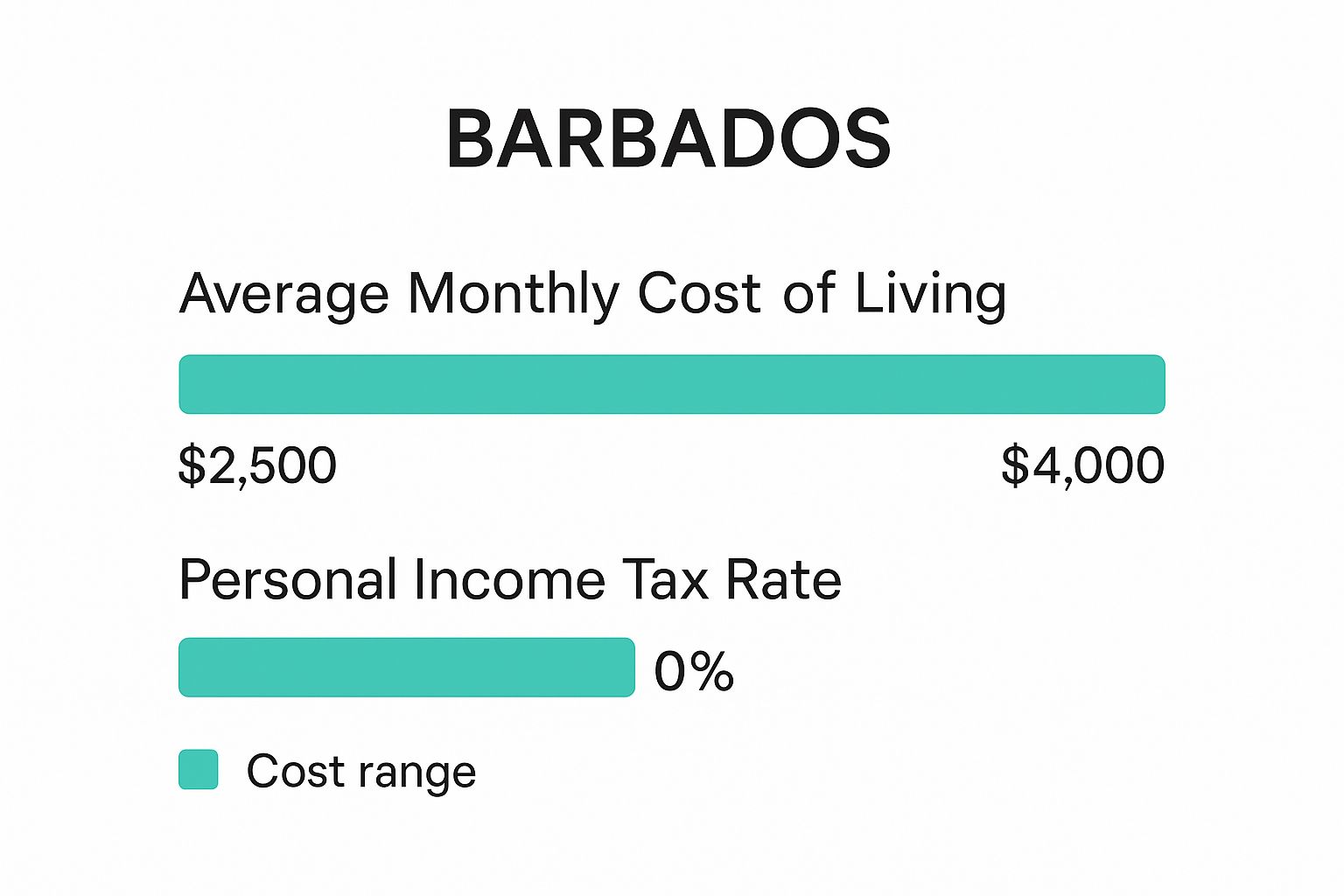
The chart highlights that while the cost of living is considerable, certain financial structures, like the absence of personal income tax for specific residency permits, create a compelling economic case for living in Barbados.
Relocation and Residency Tips
For those looking to make Barbados their home, the government offers several attractive residency options.
- Special Entry and Reside Permit (SERP): This permit is ideal for high-net-worth individuals, granting long-term residency and significant tax advantages.
- Community Integration: To truly settle in, join local clubs or organizations. Bajans are famously welcoming, and integrating into the community is the best way to enjoy the island's rich culture.
- Property Investment: The stability of the Barbadian market makes it a solid choice for long-term investment. If you are exploring different markets, you can learn more about the best Caribbean islands for real estate investment on realestatelasterrenas.com to compare opportunities.
2. Cayman Islands: Financial Hub with a Tropical Twist
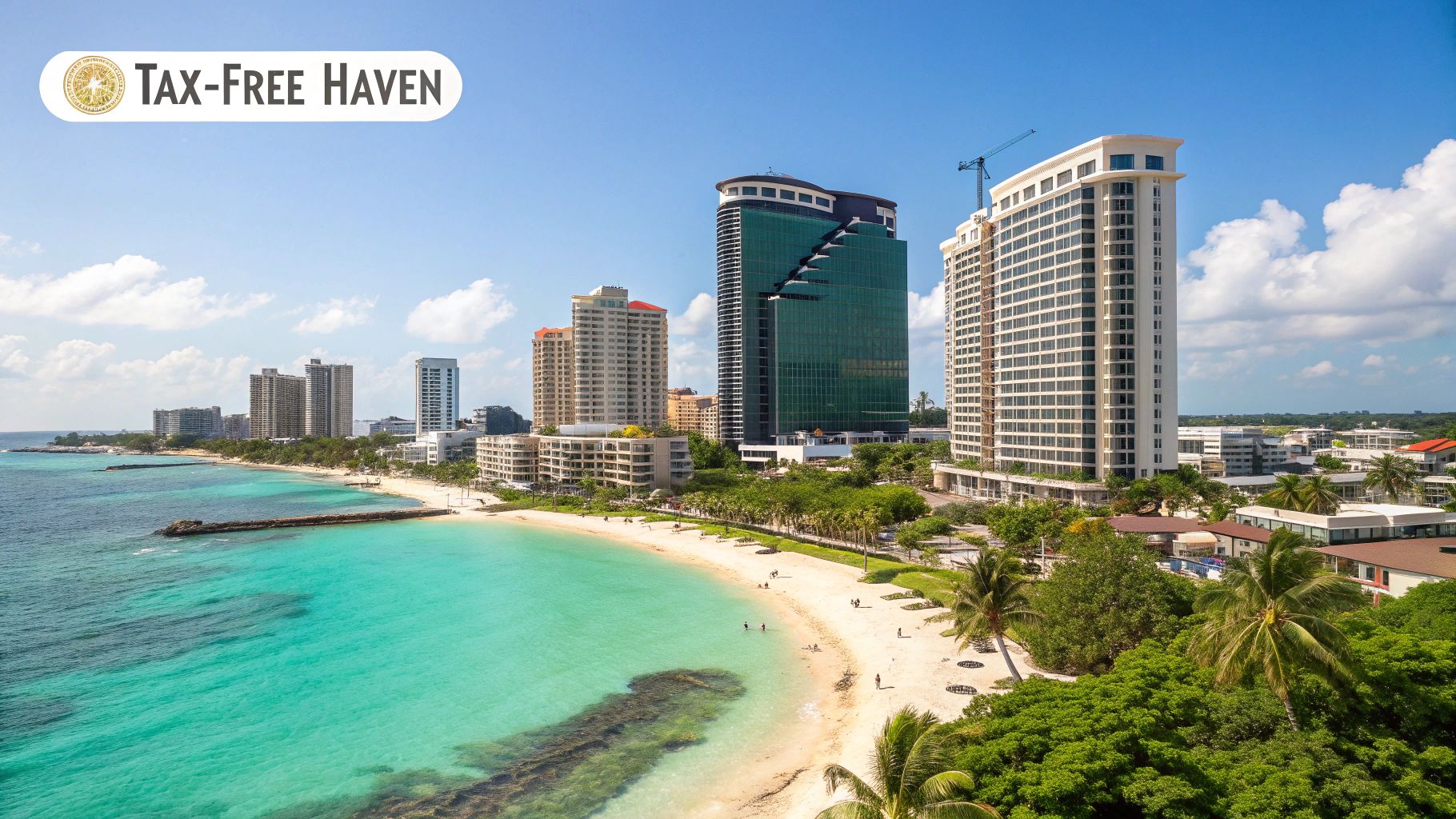
As a premier global financial centre and a British Overseas Territory, the Cayman Islands offer an unparalleled combination of prosperity, safety, and Caribbean beauty. This trio of islands, led by the cosmopolitan Grand Cayman, provides a tax-neutral environment with world-class infrastructure, making it one of the best Caribbean islands to live for finance professionals, entrepreneurs, and discerning retirees.
The lifestyle is sophisticated yet relaxed, where modern amenities seamlessly blend with stunning natural surroundings like the famous Seven Mile Beach. The absence of direct taxation (no income, property, or capital gains tax) is a primary draw, attracting a thriving international community and major corporations.
Lifestyle and Cost of Living
Life in the Cayman Islands is defined by a high standard of living, reflected in its cost. Daily expenses, from groceries to utilities, are among the highest in the Caribbean, comparable to major global cities. This is a direct result of its robust economy, strong currency (pegged to the US dollar), and reliance on imports.
The real estate market is dynamic and commands premium prices, particularly along the Seven Mile Beach corridor where luxury condos and villas are common. However, the investment is backed by a secure legal framework and consistent demand. For a more laid-back and affordable lifestyle, many residents explore the quieter sister islands of Cayman Brac and Little Cayman, which offer a glimpse into the Caribbean of old without sacrificing modern conveniences.
Relocation and Residency Tips
Navigating residency in the Cayman Islands requires careful planning, as the government maintains strict controls to manage its growth and preserve its high quality of life.
- Secure Employment First: Work permits are tied to specific employers. It is essential to have a job offer before planning your move, as employers typically sponsor the permit application.
- Residency for Independent Means: For those not seeking employment, this pathway requires a significant financial investment in local real estate and proof of substantial annual income, making it a viable option for affluent retirees and investors.
- Explore Beyond Grand Cayman: If the hustle of George Town or the prices of Seven Mile Beach are daunting, consider Cayman Brac or Little Cayman. These islands offer lower living costs and a tighter-knit community feel.
3. Puerto Rico: U.S. Advantages and Rich Hispanic Culture
As a U.S. territory, Puerto Rico presents one of the most unique propositions for Americans seeking Caribbean life. It blends vibrant Hispanic culture with the familiarity and convenience of American infrastructure, eliminating passport requirements and currency exchange hassles for U.S. citizens. This fusion creates a dynamic environment where you can enjoy tropical beaches and lush mountains alongside access to U.S. federal programs and legal protections.
The island’s appeal is amplified by its growing technology and finance sectors, fuelled by significant tax incentives. This has attracted a diverse community of entrepreneurs, cryptocurrency investors, and mainland Americans seeking both a tax-optimized lifestyle and an authentic cultural experience. Expat communities thrive in urban centres like San Juan and exclusive enclaves such as Dorado and the surf town of Rincón.
Lifestyle and Cost of Living
Puerto Rico offers a cost of living that is generally lower than on the U.S. mainland, although it is higher than in neighbouring islands like the Dominican Republic. Daily expenses for groceries and utilities can be comparable to some U.S. states, but housing and local services are often more affordable. The lifestyle is a compelling mix of laid-back beach culture and bustling city energy, with a strong emphasis on family, music, and food.
Real estate varies dramatically by location. You can find luxury beachfront condos in Condado, sprawling estates in Dorado, or more modest homes in the mountainous interior. This diversity allows for a range of budgets, though it's important to factor in potential infrastructure challenges, like the island's occasionally unreliable electrical grid, which prompts many residents to invest in backup power solutions.
Relocation and Residency Tips
Moving to Puerto Rico is straightforward for U.S. citizens, but maximizing the benefits requires careful planning.
- Act 60 Tax Incentives: Thoroughly research the Individual Resident Investor and Export Services incentives under Act 60. These can offer significant tax reductions, including a 0% tax on capital gains and a low corporate tax rate for qualifying businesses.
- Learn Basic Spanish: While English is widely spoken in tourist areas and business circles, learning Spanish is crucial for full integration. It opens up social opportunities, simplifies daily errands, and shows respect for the local culture.
- Explore Beyond San Juan: While the capital is a major hub, explore the western coast for a more relaxed pace or the central mountains for a different perspective on island life. For those comparing Caribbean relocation options, understanding the nuances of neighbouring countries is also valuable. You can explore a detailed relocation guide for the Dominican Republic to contrast opportunities and lifestyles.
4. Turks and Caicos Islands: Tax-Neutral Luxury and Pristine Shores
As a British Overseas Territory, the Turks and Caicos Islands (TCI) are synonymous with exclusive luxury, pristine white-sand beaches, and a highly favourable tax environment. This archipelago is a top contender for those seeking a tranquil and upscale lifestyle, making it one of the best Caribbean islands to live for high-net-worth individuals, discerning retirees, and those prioritizing financial privacy.
The islands offer a peaceful and secure setting with no income tax, capital gains tax, or inheritance tax. This tax-neutral status, combined with its political stability and proximity to the United States, has attracted a sophisticated community of international investors and residents. The main island of Providenciales is the hub of activity, offering world-class amenities, gourmet dining, and luxury resort developments.
Lifestyle and Cost of Living
Life in Turks and Caicos is defined by its serene, high-end environment. The lifestyle revolves around the water, with unparalleled opportunities for diving, snorkelling, fishing, and boating. The pace is slow and relaxed, yet the infrastructure on Providenciales provides all the modern conveniences one would expect from a luxury destination.
Reflecting its exclusive reputation, the cost of living is among the highest in the Caribbean. Nearly all goods are imported, leading to premium prices for groceries, fuel, and consumer products. Expenses are comparable to major North American cities like New York or Toronto.
Real estate is the primary expenditure, with property values reflecting the islands' desirability. The market is dominated by luxury villas, beachfront condos, and high-end residential communities, particularly in areas like Grace Bay and Long Bay.
Relocation and Residency Tips
Navigating residency in TCI is straightforward for those who meet the financial criteria. The government encourages foreign investment and offers clear pathways to establishing a home here.
- Investment-Based Residency: Obtaining a Permanent Residence Certificate (PRC) is often tied to a significant real estate investment. A minimum investment in property, which varies by island, can qualify an individual and their family for residency.
- Budget Accordingly: It is crucial to budget significantly more for living expenses and property than in most other Caribbean nations. From utilities to dining, the costs are substantial.
- Healthcare Planning: While there are good medical facilities on Providenciales, it is essential to have comprehensive health insurance that includes coverage for medical evacuation to the U.S. for serious conditions.
- Community Connection: The expat community, largely composed of Americans and Canadians, is well-established and welcoming. Networking within these circles provides invaluable support and advice for a smooth transition into island life.
5. St. Lucia: Dramatic Beauty and Investment Opportunity
Known for its iconic Piton mountains piercing the sky and lush, vibrant rainforests, St. Lucia presents a compelling case as one of the best Caribbean islands to live. It masterfully balances untamed natural beauty with sophisticated, modern development. The island's dynamic blend of adventure and luxury, combined with a welcoming local culture, attracts a diverse expatriate community, from retirees to entrepreneurial professionals.
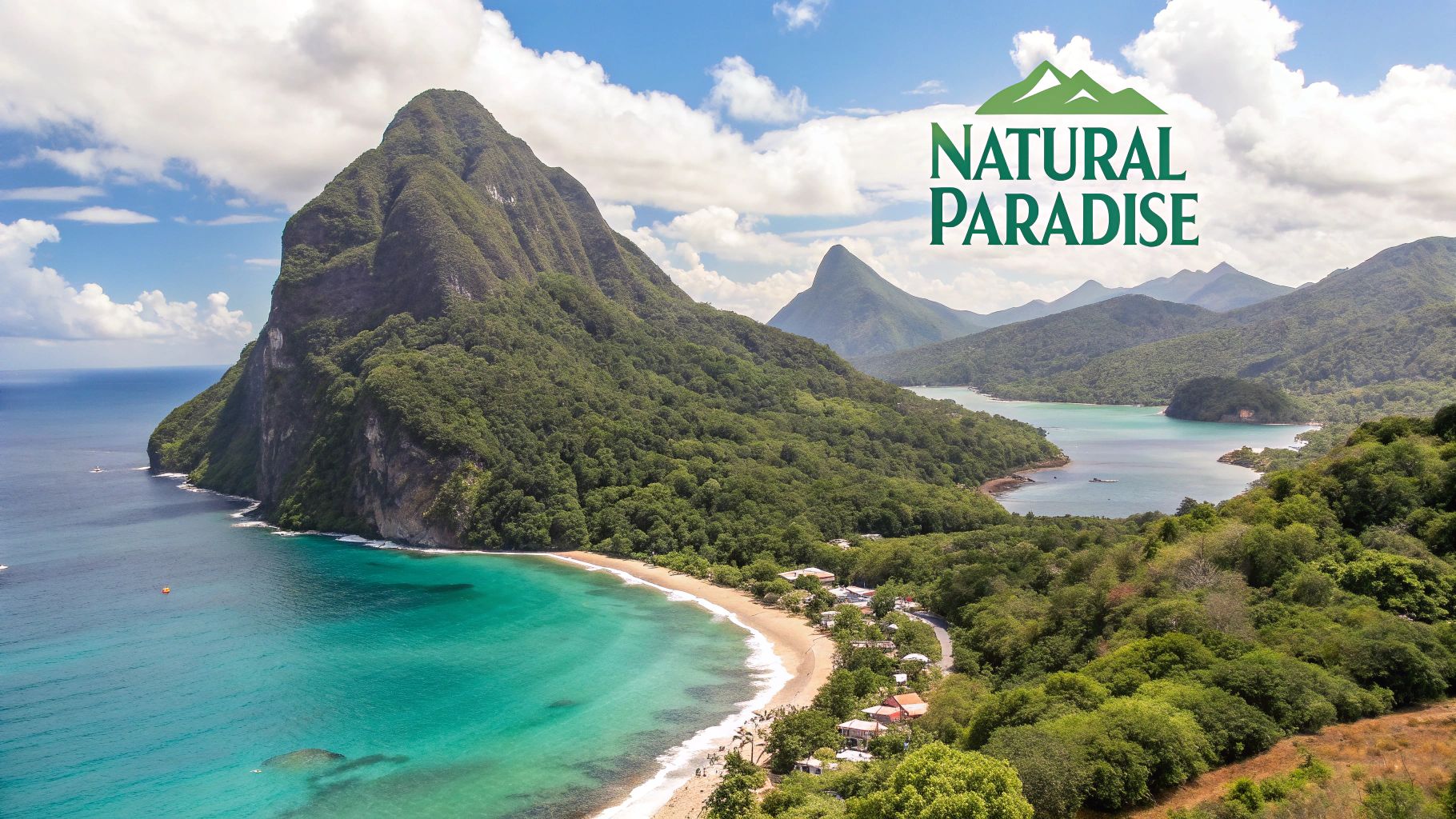
This dual appeal has fostered growing expat hubs in areas like the amenity-rich Rodney Bay and the stunningly beautiful Marigot Bay. St. Lucia is not just a haven for nature lovers; its forward-thinking government policies and successful eco-tourism projects make it a beacon for sustainable growth and international investment.
Lifestyle and Cost of Living
Life in St. Lucia is an active, outdoor-oriented experience set against a backdrop of breathtaking scenery. The cost of living is more moderate compared to islands like Barbados, offering a balance between affordability and quality of life. Everyday expenses for groceries and utilities are reasonable, though imported goods will command higher prices.
Real estate varies significantly by location. The northern part of the island, particularly around Rodney Bay and Cap Estate, features luxury villas and modern condos at a premium. In contrast, southern communities offer more affordable properties with an authentic local flavour. This variety allows for a broad range of budgets and lifestyles, a key reason it is considered one of the best Caribbean islands to live.
Relocation and Residency Tips
St. Lucia offers straightforward pathways to residency, making it an attractive option for those looking to relocate. The island's Citizenship by Investment Program is particularly notable.
- Citizenship by Investment (CBI): This program allows investors to gain citizenship through a contribution to the National Economic Fund or by investing in pre-approved real estate projects. It is one of the most reputable programs in the Caribbean.
- Northern Hubs: For those seeking modern conveniences, marinas, and a vibrant social scene, focus your property search on northern areas like Rodney Bay. The lifestyle here is comparable to that of other thriving expat centres, and for those exploring similar communities, you can gain more insight by reading about living the expat life in Las Terrenas.
- Healthcare Planning: While the island has public healthcare facilities, most expatriates opt for private health insurance to ensure access to a wider range of services and facilities. Factoring this into your budget is essential for a smooth transition.
6. British Virgin Islands: A Sailor's Haven and Financial Hub
Comprising over 60 islands and cays, the British Virgin Islands (BVI) present a unique blend of sophisticated offshore finance and world-class sailing. This British overseas territory is a magnet for finance professionals, yachting enthusiasts, and high-net-worth individuals seeking privacy, tax efficiency, and spectacular natural beauty. It's a place where corporate boardrooms and barefoot beach bars coexist seamlessly.
The BVI's reputation as a leading international financial centre provides a stable economic foundation, attracting a global community of professionals. This economic strength is balanced by an unparalleled lifestyle centred on the water, with Tortola serving as the main hub for commerce and amenities. The islands offer an exclusive, secure, and serene environment, making them one of the best Caribbean islands to live for a discerning clientele.
Lifestyle and Cost of Living
Life in the BVI is defined by the sea. Sailing, diving, and island-hopping are not just pastimes; they are integral to the local culture. The lifestyle is upscale and private, reflecting its status as a luxury destination. Consequently, the cost of living is among the highest in the Caribbean, with expenses for housing, groceries, and services rivalling major North American and European cities.
Real estate in the BVI is a premium investment, particularly for waterfront properties or those with panoramic sea views. While Tortola offers the most options for housing and services, islands like Virgin Gorda provide a more secluded, resort-style atmosphere. Budgeting for high accommodation and living costs is essential for anyone considering a move.
Relocation and Residency Tips
Navigating a move to the BVI requires careful planning, especially regarding employment and residency status. The islands' economy offers distinct opportunities, particularly for skilled professionals.
- Financial Services Focus: The most direct path to residency is often through employment in the robust financial services or legal sectors. These industries actively seek international talent.
- Inter-Island Living: Embrace the archipelago lifestyle. The reliable inter-island ferry services make it easy to live on a quieter island while working or accessing services on Tortola. For those drawn to its offshore benefits, delving into the specifics of things to know about a BVI company can provide deeper insights.
- Embrace Marine Culture: Integrating into the BVI community often happens at the yacht club or on the water. Getting involved in sailing, fishing, or marine conservation is a fantastic way to connect with residents.
7. Aruba: The 'One Happy Island' Outside the Hurricane Belt
Known as the 'One Happy Island,' Aruba is a premier choice for those seeking one of the best Caribbean islands to live on, thanks to its position outside the volatile hurricane belt. This ensures year-round sunshine and a sense of security unavailable in many other parts of the region. As an autonomous constituent country of the Kingdom of the Netherlands, it combines a reliable European legal framework with a vibrant, multicultural Caribbean lifestyle.
The island's political stability and highly developed infrastructure are major draws for expatriates. Its thriving tourism-based economy creates a dynamic environment with opportunities, particularly in hospitality and services. Strong expat communities, especially in areas like Noord and near Eagle Beach, provide a welcoming social network for newcomers from Europe and North America.
Lifestyle and Cost of Living
Life in Aruba is safe, active, and distinctly international. The cost of living is on the higher end for the Caribbean, comparable to North American standards, as most goods are imported. Daily expenses, from groceries to utilities, reflect its status as a popular and developed tourist destination.
Real estate varies significantly by location. Desirable areas popular with expats command premium prices, but more affordable options can be found further from the main tourist hubs. The market is stable, supported by both strong tourism and a consistent flow of European, particularly Dutch, residents. This makes it an attractive, albeit expensive, place for property investment.
Relocation and Residency Tips
Navigating residency in Aruba is straightforward, especially for Dutch nationals, but accessible to others as well.
- Language and Integration: While English and Spanish are widely spoken, learning some Dutch or the local Papiamento will greatly enhance your integration and daily interactions with the community.
- Explore Expat Hubs: Spend time in areas like Noord or the neighbourhoods surrounding Eagle Beach and Palm Beach to connect with established expat communities and find amenities tailored to international residents.
- Economic Opportunities: The island's robust service and hospitality sectors offer viable work opportunities for those not retiring. Additionally, residents can benefit from the island's status as a duty-free shopping destination.
Top 7 Caribbean Islands Living Comparison
| Location | Implementation Complexity | Resource Requirements | Expected Outcomes | Ideal Use Cases | Key Advantages |
|---|---|---|---|---|---|
| Barbados | Moderate (stable democracy and infrastructure) | Moderate (healthcare, education, utilities) | High quality of life, cultural richness | Expats, retirees, international business | No personal income tax, English-speaking, robust financial sector |
| Cayman Islands | High (strict work permits, financial hub) | High (modern infrastructure, security) | Tax-free income, business opportunities | Finance professionals, retirees | Zero income and corporate tax, world-class financial services |
| Puerto Rico | Low (U.S. territory regulations) | Moderate (infrastructure issues) | Tax benefits for U.S. citizens, diverse culture | U.S. citizens, entrepreneurs | No passport for U.S. citizens, federal programs access |
| Turks and Caicos | Moderate to High (residency restrictions) | High (luxury infrastructure) | Upscale lifestyle, tax-free environment | Wealthy retirees, luxury seekers | No income tax, low crime, beautiful environment |
| St. Lucia | Moderate (residency programs available) | Moderate (growing economy) | Affordable living, natural beauty | Retirees, eco-tourists, investors | Affordable cost, citizenship by investment, stable environment |
| British Virgin Islands | High (offshore financial services) | High (financial infrastructure) | Privacy, tax planning benefits | Finance professionals, yacht enthusiasts | No income tax, strong privacy laws, stable legal system |
| Aruba | Moderate (Dutch legal system) | Moderate (tourism infrastructure) | Stable climate, strong healthcare | Dutch nationals, retirees, tourists | Outside hurricane belt, multilingual, strong legal standards |
Your Next Step: Why Expert Guidance in Las Terrenas is Crucial
Navigating the dream of Caribbean living requires a clear map, and as we've explored, each island offers a distinct path. The search for the best Caribbean islands to live often highlights a compromise: high quality of life might come with a prohibitively high cost of living, or attractive property prices may be offset by complex foreign ownership laws.
For the discerning North American or European investor, the ideal destination must deliver on multiple fronts. It needs to offer a secure legal framework, strong ROI potential, and a lifestyle that justifies the investment.
The Las Terrenas Difference: A Synthesis of Opportunity
This is where Las Terrenas, on the Samaná Peninsula of the Dominican Republic, distinguishes itself not merely as another option, but as a strategic solution. Here, you discover a destination where a sound investment and an idyllic lifestyle converge, backed by a stable government that actively welcomes foreign capital.
While other islands have their merits, Las Terrenas offers a compelling, data-backed value proposition:
- Financial Advantage: The Dominican Republic's CONFOTUR law provides a 15-year property and transfer tax exemption on approved projects—a powerful incentive unmatched by regional competitors. Coupled with strong rental yields of 5.6% to 7.7%, the financial case is clear.
- Accessible Market: The path to ownership is secure and efficient, often taking just 30-60 days from offer to closing. Current market data shows accessible entry points, with modern 2-bedroom condos in prime locations like Playa Popy and Bonita Village priced between $250,000 and $450,000 USD, while luxury villas begin around $600,000 USD.
- Unmatched Lifestyle: Las Terrenas delivers a unique blend of laid-back beach culture and European sophistication. With new infrastructure like the El Catey International Airport and an expanding fiber-optic network, it provides a high-quality living experience without the extreme costs found elsewhere.
Your Action Plan for a Secure Investment
Making this vision a reality requires more than just online research; it demands localized, expert guidance. An expert partner acts as your advocate, ensuring your Dominican Republic property investment is not only secure but also optimized for maximum return.
With over 25 years dedicated exclusively to this market, our role at Atlantique Sud is to provide that crucial advantage. We turn a complex decision into a confident and successful transition, helping you navigate everything from property selection to the CONFOTUR application process.
Ready to explore the tangible opportunities that make Las Terrenas one of the best Caribbean islands to live and invest in? Contact Atlantique Sud Real Estate today for a personalized market consultation. Our 25+ years of local expertise ensures you navigate the market with confidence, securing your piece of paradise on the most favorable terms.
Thinking about living in Las Terrenas? Browse our current property for sale in Las Terrenas — from beachfront condos to luxury villas.