Merengue in Dominican Republic: a Complete Guide to Music
You usually notice merengue in Dominican Republic before you look for it. It comes out of a colmado speaker, drifts across a beach bar at sunset, or takes over a family table the moment somebody clears enough space to dance.
In Las Terrenas, that moment happens often.
Visitors sometimes arrive thinking merengue belongs to staged folklore shows or big-city nightlife. Then they spend one weekend here and realize it lives somewhere much closer to daily life. It shows up in birthday parties, local celebrations, casual Sundays, and those unplanned nights when one song turns into five.
That’s why merengue matters if you want to understand the country beyond the postcard version. It isn’t just music. It’s a social language. People flirt through it, celebrate through it, teach children through it, and welcome newcomers through it.
If you want a broader look at Dominican musical culture before diving deeper into merengue, this overview of Dominican music traditions is a useful place to start.
Feel the Beat An Introduction to Merengue
The first time many people connect with merengue, they don’t understand the structure yet. They respond to the energy.
You hear the rhythm first. Then the room changes. Someone starts marking time with a shoulder, somebody else smiles, and within seconds there’s a couple dancing in a space that didn’t seem large enough a moment earlier.

In Las Terrenas, that scene doesn’t require a formal venue. You might hear merengue near Pueblo de los Pescadores, at a small gathering in El Limón, or from a roadside stop where people are ending the day well. That’s part of its charm. It doesn’t wait for perfect conditions.
Why it feels so immediate
Merengue works because it invites participation fast.
You don’t need long instructions to recognize the pulse. Even if you’ve never danced it, the music gives you a place to stand. That’s rare. Some genres ask you to study first. Merengue asks you to join.
Merengue is one of the few musical traditions that can make a visitor feel included before they feel confident.
That’s also why it becomes a bridge in mixed communities. In a town like Las Terrenas, where locals, longtime residents, and newcomers from abroad share the same social spaces, merengue gives everyone a common rhythm without forcing anyone into a formal performance.
What visitors often get wrong
The biggest mistake is treating merengue like a show to watch from a distance.
What works is simpler:
- Stay a little longer: The best moments usually happen after the obvious “event” seems over.
- Choose local settings: Small bars, community gatherings, and neighborhood celebrations often feel more natural than polished productions.
- Accept imperfection: If you wait until you’re ready, you’ll miss the authentic experience.
If you spend enough time around merengue here, you start to understand something important. The music isn’t added onto Dominican life. It’s woven into it.
From Rural Roots to a National Symbol
A visitor in Las Terrenas can hear merengue at a beach bar and assume it has always belonged to the whole country in the same way. The history is less tidy, and more interesting than that.
Merengue grew out of rural Dominican life, especially in the Cibao Valley during the 19th century. Long before it appeared on formal stages or in official ceremonies, it moved through community dances, local celebrations, and everyday social life. For that reason, the music still carries a strong sense of place. You can hear it in the way people respond to it. It invites participation, not distance.
Those roots matter because they explain the character of the genre. Merengue developed through the meeting of African, European, and Taíno influences, which helps explain why Dominicans often hear the country itself inside the music. The older rural style, closely tied to perico ripiao, keeps that connection especially clear. It is more direct, more intimate, and less polished. In practical terms, if you want to understand merengue beyond the version packaged for visitors, spend time with the traditional style and follow a few local recommendations in this archive on merengue music around Las Terrenas.
Why the rural history still shapes the experience
In the Dominican Republic, traditions often survive because people keep using them. Merengue is a strong example.
It stayed alive in family gatherings, patron saint festivities, neighborhood parties, and informal dance spaces long before many outsiders treated it as heritage. That is why the best merengue experiences today still tend to happen in places where the music feels like part of the evening rather than the main attraction. Visitors in Las Terrenas usually understand this fastest once they leave the polished venues for a while and spend time where locals are dancing for themselves.
Trujillo changed its status
Merengue’s rise into a national symbol did not happen by accident. During the rule of Rafael Trujillo from 1930 to 1961, the regime promoted merengue aggressively as Dominican national music, a history noted in UNESCO’s merengue heritage listing.
That shift brought a real trade-off. State support gave merengue broader reach and helped move it across class boundaries, but political sponsorship also shaped how the country presented the genre to itself and to the world. Anyone trying to understand Dominican culture seriously should keep both truths in view. People embraced merengue because they loved it, and political power also helped fix it at the center of national identity.
Historical reality: Merengue became a national symbol through popular devotion, cultural continuity, and state promotion at the same time.
That layered history is part of what gives the music its weight. It belongs to the countryside, to working-class communities, to formal institutions, and to ordinary social life all at once.
UNESCO recognition confirmed a living tradition
When UNESCO added merengue to the Representative List of the Intangible Cultural Heritage of Humanity on November 30, 2016, it gave international recognition to something Dominicans had understood for generations. The designation mattered because it acknowledged a living practice, not a relic.
A few milestones show the arc clearly:
| Moment | Why it matters |
|---|---|
| Mid-19th century origins in the Cibao Valley | Established merengue’s rural foundation |
| Trujillo era from 1930 to 1961 | Helped turn it into a national emblem |
| UNESCO inscription on November 30, 2016 | Confirmed its cultural importance on a global stage, as noted earlier |
For someone spending real time in Las Terrenas, this history changes how the music lands. A night of dancing is still fun. It is also contact with one of the clearest expressions of Dominican identity, shaped by rural memory, politics, class, celebration, and daily life.
Decoding the Rhythm Music and Dance Essentials
If merengue feels easy to enjoy, that doesn’t mean it’s musically simple. It means the essentials are so well built that even first-time listeners can lock in quickly.
Traditional merengue relies on a conjunto típico built around three core instruments. According to this merengue dance and music breakdown, those instruments are the tambora, güira, and button accordion, with the rhythm typically driven in 4/4 meter and often played between 120 and 180 BPM.
If you want to explore more articles connected to the genre, this archive on merengue music in Las Terrenas is worth bookmarking.
The three sounds you should learn to hear
Once you can identify the main parts, merengue becomes much easier to follow.
- Accordion: This is often the melodic voice people notice first. It gives traditional merengue much of its recognizable lift and character.
- Tambora: A double-headed drum with deep pulse on one side and sharper accents on the other. It gives the music its push.
- Güira: The metallic scrape you keep hearing underneath everything else. It adds constant motion and texture.
What works for beginners is listening for the tambora and güira together, not separately. Their interlocking pattern creates the forward drive that makes the dance feel almost unavoidable.
Why the rhythm moves your body so quickly
Merengue doesn’t ask for complicated footwork at the start. The rhythm does most of the teaching.
The basic idea is steady weight transfer. Your body hears the beat, then your feet follow. Hips come naturally once you stop trying to force them.
A practical beginner sequence looks like this:
- Start with the count: Think a clear side-to-side or marching pulse.
- Keep your steps small: Large steps make you late.
- Let the knees stay soft: Stiff legs kill the groove.
- Hold your frame relaxed: Too much tension makes both partners uncomfortable.
Don’t chase style first. Find the beat, stay balanced, and let the movement get cleaner after a few songs.
A first dance is simpler than people expect
For social merengue, you don’t need a big move set.
A beginner only needs to understand a few basics:
| Element | What to do |
|---|---|
| Footwork | Step evenly and stay with the pulse |
| Partner hold | Comfortable and close, never rigid |
| Turns | Add them later, after your timing settles |
| Attitude | Relaxed beats impressive every time |
What doesn’t work is overtraining from videos and then freezing in a real social setting. What does work is learning the rhythm, dancing with people who are patient, and accepting that social dance is conversation, not choreography.
The nice thing about merengue in the Dominican Republic is that locals rarely expect perfection from a newcomer. They do notice willingness.
Where to Dance From Capital Clubs to Samaná Shores
You can spend one night in Santo Domingo under stage lights with a full band and polished sound, then spend the next in Las Terrenas dancing on a terrace with sand still on your shoes. Both are real merengue experiences. They serve different moods.
If you want the big public face of merengue, the capital still carries that weight. Major venues and festivals in Santo Domingo and Puerto Plata helped shape how the genre is presented to national and international audiences, and artists such as Wilfrido Vargas and Los Hermanos Rosario pushed that sound far beyond the island, as noted in this overview of merengue’s reach and festival culture.
The capital gives you scale
Santo Domingo suits visitors who want a night built around music as an event. You get larger crowds, louder rooms, stronger production, and a higher chance of seeing confident local dancers who treat the floor almost like a performance space.
That can be exciting. It can also be a little stiff for a newcomer.
In big city venues, people sometimes watch before they join. If your goal is to understand merengue from the inside, that spectator feeling has limits. You may leave impressed, but not always connected.
Las Terrenas gives you participation
Las Terrenas works differently. Merengue shows up in community spaces, beach bars, and local celebrations, not only in formal clubs. The same TN Tribune piece points to that wider life beyond headline venues, and that is the part many long-term visitors end up valuing most.
Here, the best night is not always the one with the best flyer.
A few local patterns are useful if you want the right setting:
- Pueblo de los Pescadores: Good for an easy social night where dinner can turn into drinks and dancing without much planning.
- Beachfront spots near Playa Bonita: Better for relaxed evenings, especially if you prefer open-air music and a mixed crowd of locals, expats, and travelers.
- Town events and local celebrations: Often the strongest option for cultural immersion. The music feels less staged, and people are usually more open to pulling newcomers into the dance.
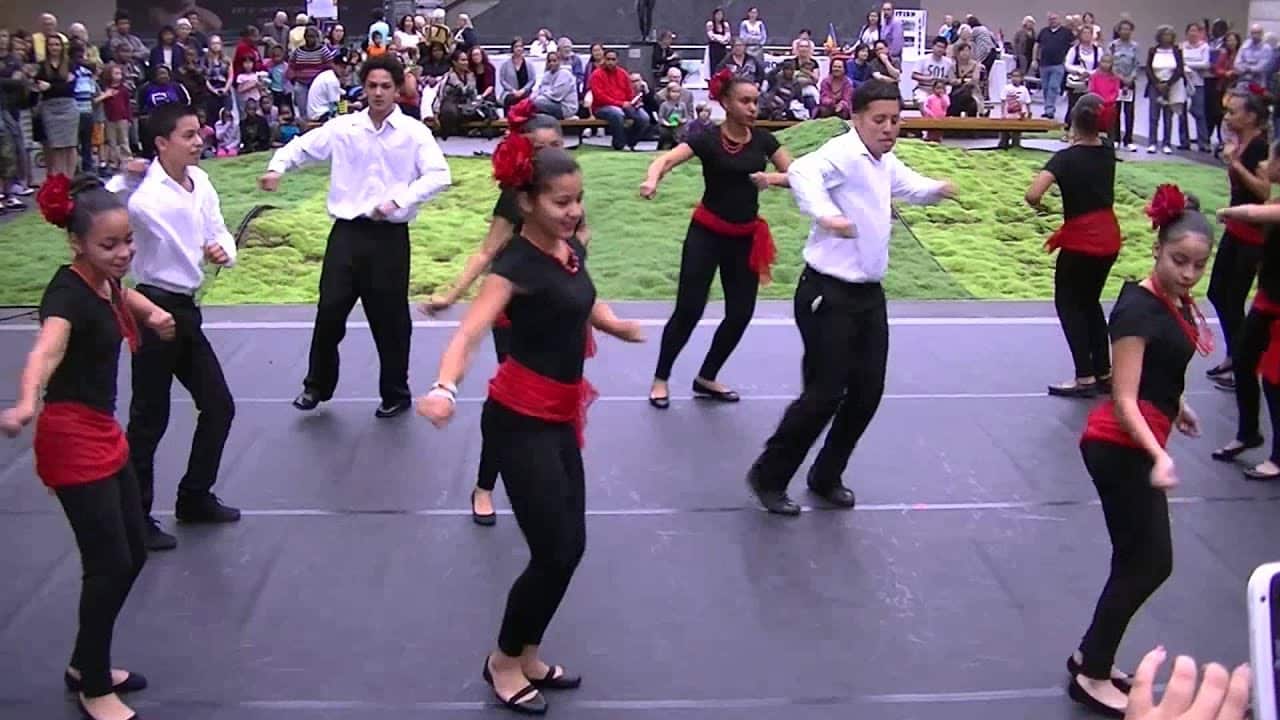
A quick look at the feeling of live merengue helps set expectations:
How to choose the right setting
The right venue depends on what kind of night you want, and how comfortable you are stepping into local social space.
| What you want | Better fit |
|---|---|
| Big-name nightlife feel | Santo Domingo |
| Easier social entry point | Las Terrenas |
| Formal club setting | Capital venues |
| Casual dancing with locals | Samaná Peninsula spots |
My advice in Las Terrenas is simple. Ask bartenders, musicians, and neighbors what is happening that week. The strongest merengue nights here often spread by word of mouth, and that is part of the charm. You are not just finding a place to dance. You are finding the room where people gathered to share the music.
Finding Your Feet How to Learn Merengue in Las Terrenas
People often assume they need several lessons before dancing in public. In Las Terrenas, that usually slows them down.
The most effective way to learn is a mix of basic instruction and social repetition. Digital workshops exist, but the essence of merengue is still best learned through participation, and in Las Terrenas that often happens informally through observation and practice at social gatherings. That process also helps newcomers connect in a community with 6,000+ expats, according to this background on merengue learning and community life.
Three ways people actually learn here
Some methods work better than others depending on personality.
Private instruction suits people who feel self-conscious. A good local teacher can fix timing, frame, and basic turns quickly. This is the fastest route if you want confidence before going out.
Small group classes are better if you enjoy learning with other newcomers. They add a social layer from the start, which matters because merengue is social dance, not technical display.
Learning on the floor is the Dominican way many visitors remember best. A friend, bartender, neighbor, or someone at a gathering says “vamos,” and suddenly you’re learning in real time.
What works and what doesn’t
Here’s the honest version.
What works:
- Take one lesson, then go out quickly: Immediate practice locks in the rhythm.
- Dance with different partners: You learn adaptation fast.
- Watch before jumping in: A few songs of observation can teach a lot about tempo and spacing.
What doesn’t:
- Waiting to be perfect: You’ll stay seated too long.
- Overcomplicating the basics: Merengue rewards timing more than fancy movement.
- Choosing only tourist-heavy settings: You may get entertainment, but less real practice.
The fastest students are rarely the most talented. They’re the ones willing to dance three imperfect songs in a row.
Simple etiquette that makes everything easier
A little dance-floor awareness goes a long way in Las Terrenas.
- Ask politely. No need for a rehearsed line.
- Accept “no” gracefully. People rest, chat, and rotate.
- Keep the first dance basic. Don’t try to impress with moves you don’t control.
- Respect the space. Smaller venues mean tighter floors.
- Smile and continue. If you miss a beat, keep going.
If you want to learn merengue in Dominican Republic settings that feel real, Las Terrenas is a strong place to do it because the social barrier is lower. People here are used to cultural mixing. That makes the first step easier.
Living the Rhythm Merengue and the Las Terrenas Lifestyle
The reason merengue matters in Las Terrenas isn’t just entertainment. It shapes the social texture of the town.
In practice, it helps people meet across backgrounds that might otherwise stay separate. That aligns with one of the key ideas behind merengue’s cultural importance in the Dominican Republic. Its role in social cohesion across classes is central to how the tradition is understood, and in expat hubs like Las Terrenas, hybrid events that blend merengue with international music help create a strong sense of community and a quality of life that draws residents and supports rental demand.
If you’re getting to know the area itself, this local overview of Las Terrenas and Samaná gives useful context beyond the dance floor.
Why culture changes daily life here
A beach town can be beautiful and still feel flat.
Las Terrenas avoids that when local culture stays visible in ordinary life. Merengue is part of that. It gives social spaces a local heartbeat. Without it, many international towns drift into a generic resort mood. Pleasant, but thin.
With it, daily life feels anchored.
You see that in the mix of places and people. One evening may move from a quiet dinner in Playa Bonita to music with friends near Pueblo de los Pescadores. Another may start in Portillo or Cosón with a more residential feel and end with dancing somewhere informal. In those moments, culture isn’t a scheduled activity. It’s the setting people live inside.
Why discerning buyers notice this quickly
People don’t choose a home only for walls, terraces, or beach access. They choose for rhythm of life.
That’s especially true in Las Terrenas. A condo close to walkable social areas attracts one type of resident. A villa tucked farther out offers another. Neither is automatically better. The right fit depends on whether you want quiet retreat, easy spontaneity, or a balance of both.
A practical way to consider this:
| Lifestyle preference | Areas people often consider |
|---|---|
| Walkable evenings and social energy | Town center, Pueblo de los Pescadores side |
| Quieter beach living | Playa Bonita, Cosón |
| Residential calm with access | Portillo, edges of town |
| Nature-linked day trips | El Limón side |
What lasts longer than a trend
Merengue also tells you something important about Las Terrenas as a place to live. It still has local identity.
That sounds obvious, but it isn’t. Plenty of attractive coastal towns lose their center as they internationalize. Las Terrenas has changed a lot, yet music, dance, and mixed-community gatherings still hold people together in a very Dominican way.
Places age well when they keep their own character. Merengue is one of the reasons Las Terrenas still feels like itself.
For buyers, renters, retirees, and frequent visitors, that matters more than marketing language ever will. A town with culture built into everyday life feels easier to return to, and easier to belong in.
If you’re planning a visit and want to experience the lifestyle behind the listings, Atlantique Sud Real Estate can help you get oriented in Las Terrenas and show you the neighborhoods that match the way you want to live.
Thinking about living in Las Terrenas? Browse our current property for sale in Las Terrenas — from beachfront condos to luxury villas.
Key Merengue Festivals & Traditions in the DR
Merengue is the Dominican Republic’s national music and dance — recognized by UNESCO as Intangible Cultural Heritage of Humanity. Two big festivals anchor the calendar:
| Festival / element | When & where | Note |
|---|---|---|
| Santo Domingo Merengue Festival | Late July–early August, Malecón, Santo Domingo | The country’s biggest merengue celebration |
| Puerto Plata Merengue Festival | Around the third week of October, Malecón, Puerto Plata | North-coast celebration with free concerts |
| Perico ripiao (típico) | Year-round | The traditional country style of merengue |
| Core instruments | — | Accordion, güira and tambora |
Dreaming about more than a visit?
Thousands of expats have made Las Terrenas home. See what living here is really like — or, when you’re ready, book a guided Real Estate Discovery Tour and view homes in person.
Merengue in the Dominican Republic: FAQ
When is the Merengue Festival in the Dominican Republic?
The flagship Santo Domingo Merengue Festival runs from late July into early August each year along the city’s seafront Malecón. A second major festival takes place in Puerto Plata around the third week of October. (Exact dates shift year to year, so confirm before you travel.)
Where did merengue originate?
Merengue originated in the Dominican Republic in the 19th century and grew into the country’s defining national genre. Its traditional country form, perico ripiao, comes from the Cibao valley around Santiago.
What instruments are used in merengue?
Classic merengue is built on three instruments: the accordion (melody), the güira (a metal scraper that keeps time) and the tambora (a two-headed drum). Modern orchestras add brass and keyboards on top.