Construction Dispute Resolution in the Dominican Republic
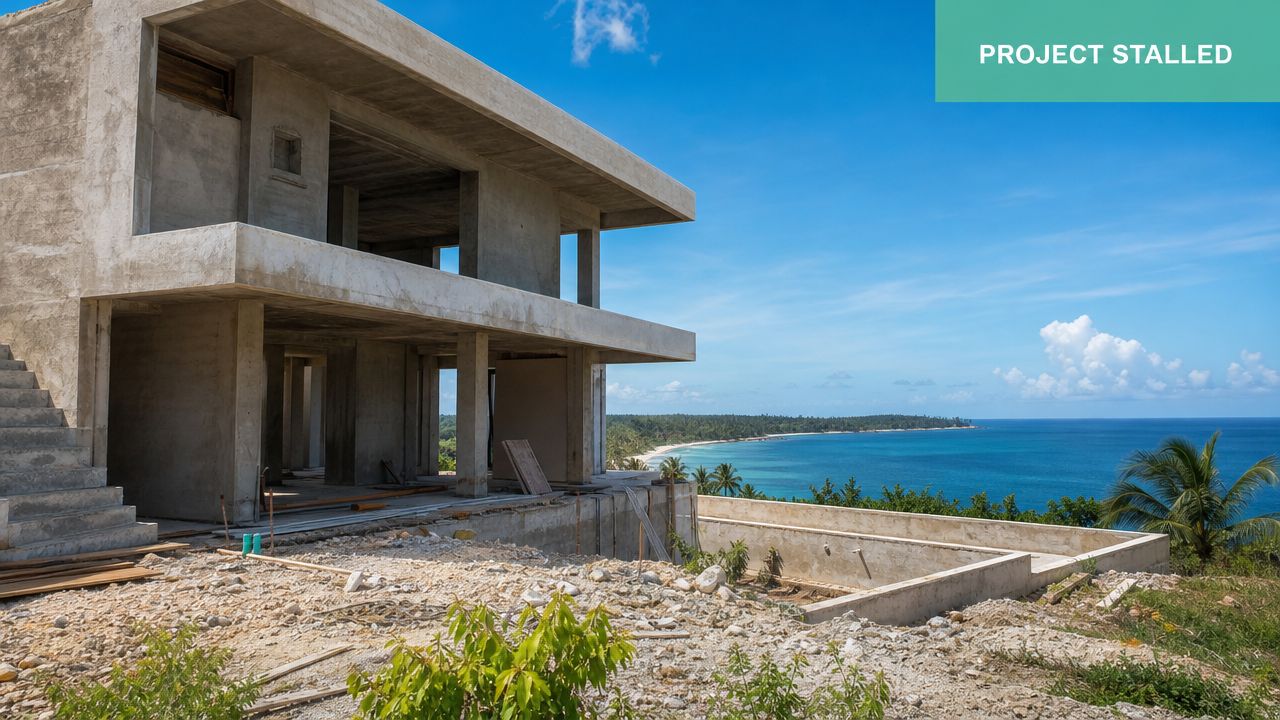
You're probably reading this because the build no longer feels exciting. The architect's renderings still look beautiful, the site in Las Terrenas still has the view you wanted, maybe near Playa Bonita, Cosón, or Portillo, but the work on the ground has slowed down. A promised delivery date slipped. Extra invoices started arriving. WhatsApp messages got shorter, then less frequent.
That's the point where many foreign investors make a costly mistake. They either panic and stop paying without advice, or they keep funding a bad situation because they hope the tension will pass on its own. Neither approach works well in the Dominican Republic, especially when you're managing a project from abroad.
Construction disputes aren't unusual. They're part of the inherent risk of building. Serious disputes arise in 10% to 30% of all construction projects, and one in four projects has a claim, according to the U.S. National Academies. The same source notes that average global dispute value reached $52.6 million in 2021, and industry reporting cited by construction-law sources puts North America at about $43 million in 2024 through that same reference point. Those are large-market figures, but the practical lesson is simple. Even relatively modest villa projects can turn into expensive fights if the contract is weak and the records are poor.
In Las Terrenas, the risk usually isn't one dramatic event. It's a series of small failures. An unclear scope. Imported materials delayed. A verbal change approved on-site. A payment released too early. Then the relationship breaks down.
Table of Contents
- When Your Dream Build Hits a Roadblock
- The Anatomy of a Construction Conflict
- Mediation vs Arbitration Which Path to Choose
- How a Dispute Plays Out in the DR
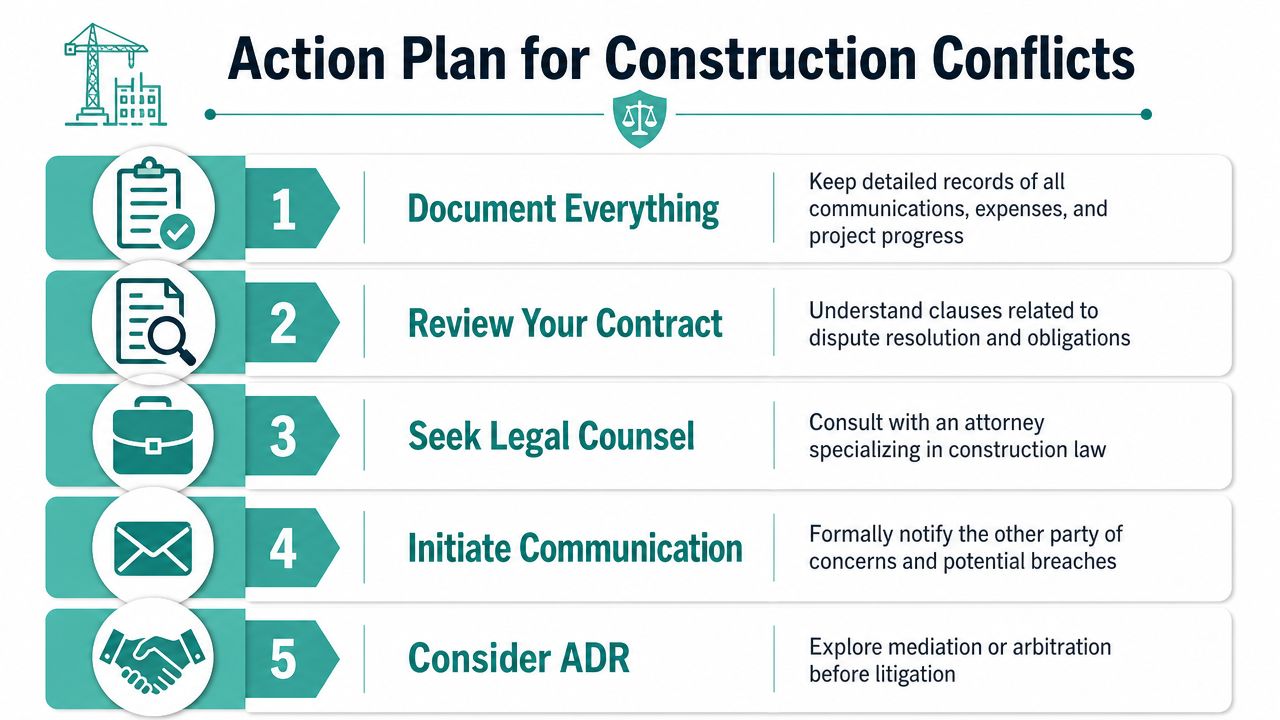
- A Step-by-Step Action Plan for Conflicts
- Designing a Contract to Avoid Disputes
- Building with Confidence in Las Terrenas
When Your Dream Build Hits a Roadblock
A typical version goes like this. You buy land above Playa Bonita or on the road toward El Limón. The team starts strong. The excavation is done, blockwork rises quickly, and then the first signs of trouble appear. The contractor asks for an advance “to keep momentum.” A finish you thought was included suddenly isn't. You hear that materials are delayed, but nobody can show a clean revised schedule.
Foreign owners are especially exposed because distance hides deterioration. If you're in Miami, Montreal, Paris, or São Paulo, it can take too long to realize that the issue isn't just delay. It's control. By the time you fly back to Las Terrenas, the problem may already involve workmanship, unpaid suppliers, disputed extras, or an unfinished shell exposed to rain.
Practical rule: The first serious risk isn't the defect itself. It's losing the paper trail that proves how the defect, delay, or overcharge happened.
That's why construction dispute resolution matters long before anyone files a formal claim. It starts with understanding where advantage comes from. Good records, a usable contract, and early intervention usually matter more than angry meetings on-site.
Owners coming from other countries often assume there's a simple local tribunal that will sort everything out quickly. Sometimes they also look at overseas systems to understand how construction claims are handled elsewhere. For example, this overview of understanding NCAT building claims is useful as a comparative reference because it shows how specialized forums can differ from what you may face in the Dominican Republic.
Before conflict starts, permit discipline also matters more than many buyers expect. If you're still at planning stage, it's worth reviewing the local permit process through this breakdown of building permits in the Dominican Republic. Weak paperwork at the start makes later disputes harder to untangle.
The Anatomy of a Construction Conflict
Most disputes in Las Terrenas don't begin as lawsuits or arbitrations. They begin as unresolved site questions. Someone keeps building while the scope is unclear. Someone approves a change verbally. Someone assumes a delay is obvious and doesn't document it. A month later, everyone tells a different story.
Delay is rarely just delay
Owners often hear broad explanations. Customs issue. Crew issue. Rain issue. Supplier issue. Sometimes those explanations are valid. Sometimes they're cover for poor sequencing or weak supervision.
In serious delay and cost-overrun disputes, experts usually rely on schedule analysis, contract review, audits, and data analytics to show the cause-and-effect link between what happened on the project and the financial damage that followed, as described by Exponent's construction dispute support practice. That's the right mindset for owners as well. Don't ask only, “Why is this late?” Ask, “What event caused this delay, when did it start, what part of the work did it affect, and where is that documented?”
Here are the common triggers we see on Caribbean projects:
- Imported material bottlenecks: Windows, specialty fixtures, hardware, and mechanical items can disrupt sequencing when procurement wasn't realistic from the start.
- Scope drift disguised as normal progress: The contractor treats added work as obvious. The owner thinks it was included.
- Labor reshuffling: Crews move between projects, especially when another site becomes more urgent or better funded.
- Late owner decisions: Finishes, kitchen layouts, pool details, and electrical upgrades often arrive after the structure is already moving ahead.
Defects look different in a tropical build
Quality disputes in Las Terrenas have a local flavor. Waterproofing failure is a big one. So is poor detailing around roofs, terraces, window openings, and exterior finishes exposed to salt air and humidity. In a dry climate, a shortcut may stay hidden longer. Here, it often reveals itself fast.
A few red flags deserve immediate attention:
| Issue | Why it escalates |
|---|---|
| Cracks and concrete concerns | The parties may disagree on whether the issue is cosmetic, structural, or caused by later site conditions |
| Water intrusion | Damage spreads into finishes, electrical systems, cabinetry, and paint, making the original source harder to isolate |
| Improper materials | A product that looks acceptable on day one may perform badly in humidity, heat, or coastal exposure |
| Incomplete punch items | Small unfinished items become leverage in payment disputes |
On most troubled projects, payment conflict is the last symptom, not the first one.
That's why owners should treat payment disputes as a warning light, not the core disease. If a contractor says the owner isn't paying, and the owner says the work is defective, the key question is usually what the contract required, what changed, and what the records prove.
Mediation vs Arbitration Which Path to Choose
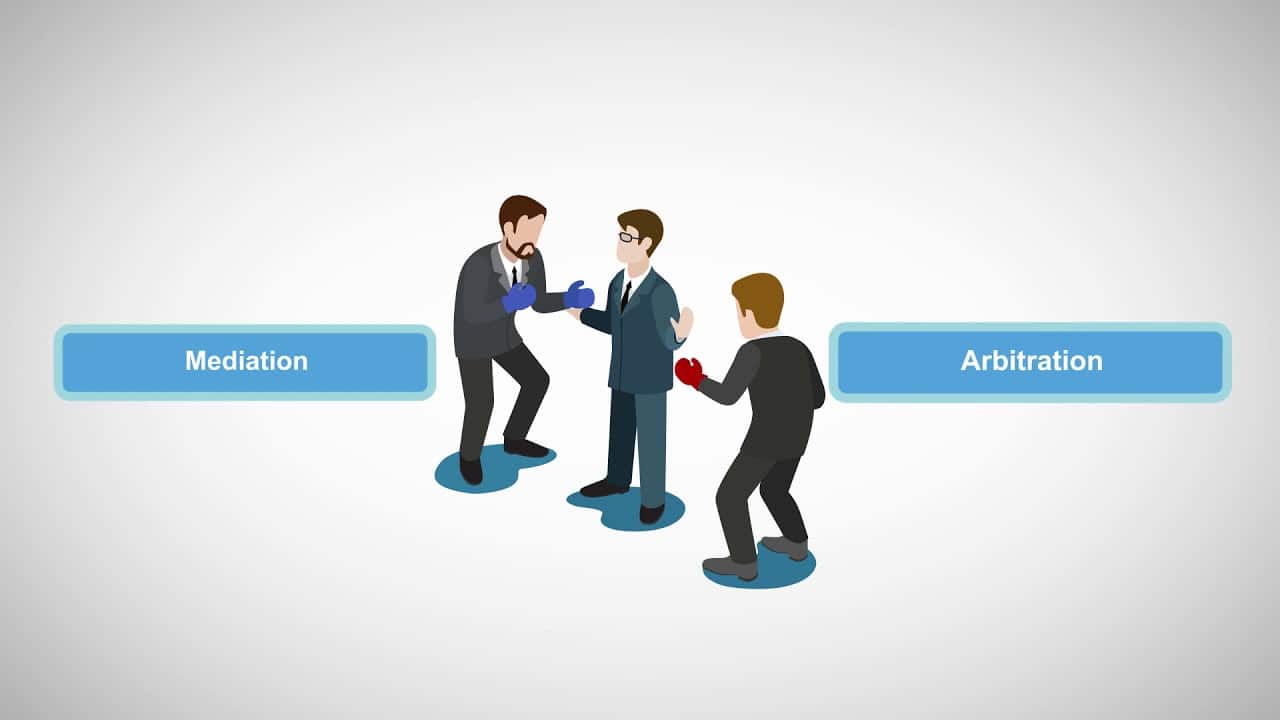
When direct negotiation stops working, the next fork in the road is usually between mediation and arbitration. They sound similar to many non-lawyers. They aren't.
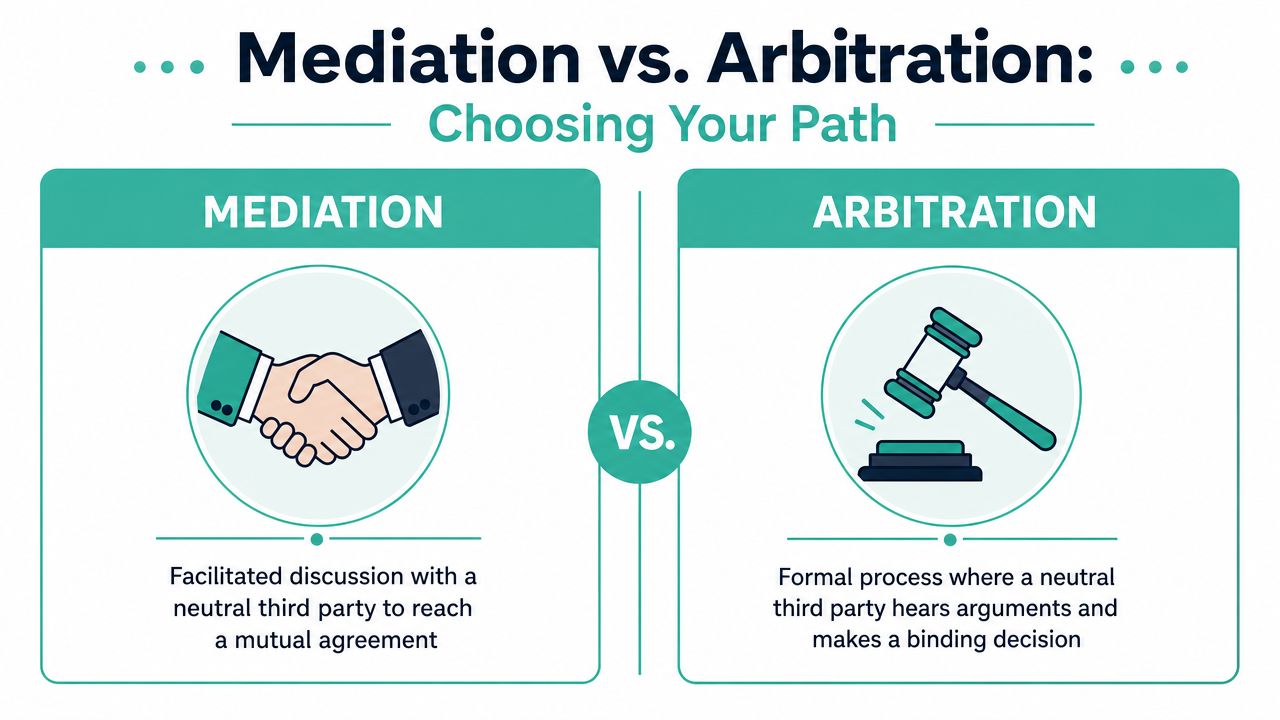
Mediation is a managed negotiation. Arbitration is a private decision process that looks much closer to a court case. One helps the parties find a deal. The other gives them an outcome.
A useful historical reference here is statutory adjudication in the United Kingdom. The Housing Grants, Construction and Regeneration Act 1996 introduced a fast-track system where an adjudicator must issue a decision within 28 days, with a possible 14-day extension at the referring party's request and any further extension only by agreement. That framework became a major reference point for “pay now, argue later” thinking in construction. The Dominican Republic doesn't mirror that exact system, but the lesson is relevant. In active projects, speed often matters as much as legal perfection.
Mediation works when the project can still be saved
Mediation is usually the better choice when both sides still need each other. That's common in Las Terrenas, especially when replacing a contractor midway would create new delay, security problems, and rework risk.
Mediation tends to work best when:
- The relationship is damaged but not dead: The owner still believes the contractor can finish if the structure around the project changes.
- The dispute is mixed: Delay, quality, extras, and payment are all entangled, so a creative package solution is more useful than a narrow ruling.
- Both sides need speed and privacy: Nobody wants a public legal fight while the house sits exposed.
A good mediator can help produce practical outcomes that a court or arbitrator may not create easily. Revised milestones. Independent inspections. Retention holdbacks. Limited scope reductions. Material substitutions. A protocol for change orders.
Here's the trade-off. Mediation only works if both sides are prepared to move. If one party uses it to stall, collect information, or create the appearance of reasonableness without changing position, you lose time.
Later in the process, this overview can help clarify the practical differences:
Arbitration fits cases that need a final answer
Arbitration makes more sense when trust is gone and the central issue needs a binding result. Maybe the contractor has left the site. Maybe the defects are serious. Maybe one side won't accept responsibility without being compelled.
This quick comparison helps:
| Method | Main advantage | Main drawback | Best use case |
|---|---|---|---|
| Mediation | Flexibility | No guaranteed result | Ongoing project that still can be rescued |
| Arbitration | Binding decision | Less control over outcome | Deadlocked dispute needing final resolution |
Arbitration is often cleaner for foreign investors because it can be more structured than informal local pressure tactics and more private than court litigation. But it still depends heavily on your contract. If the clause is vague, the procedure can become its own argument.
How a Dispute Plays Out in the DR
The Dominican Republic gives you legal remedies, but foreign investors should go into the process with realistic expectations. If you come from a common-law country, the system may feel formal, document-heavy, and slower than you expected.
That doesn't mean you're unprotected. It means your advantage stems from preparation. The stronger your contract, notices, records, and legal counsel, the more options you'll have before a dispute hardens into a court battle.
The legal culture may feel unfamiliar
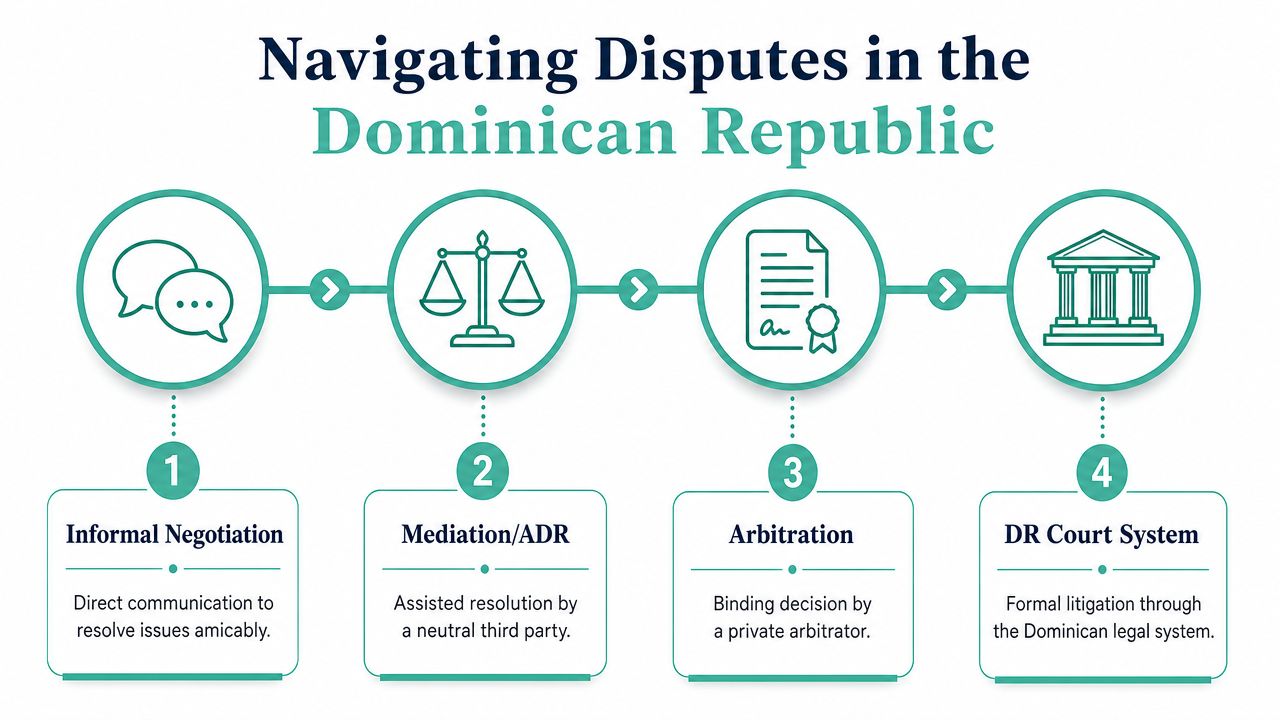
In practice, many owners in Las Terrenas try informal negotiation first, then some form of ADR, and only then consider full litigation. That sequence makes sense. Once a matter enters the court system, momentum usually slows and costs rise.
If you think you may end up in court, act as if every site report, invoice, photo, and message may later need to explain the project to someone who was never there.
That's also why governing-law and venue language shouldn't be treated as boilerplate. Contracts for a build in the Dominican Republic should be drafted for the Dominican Republic, not copied from a foreign template. If your agreement is silent or sloppy on jurisdiction, service, evidence, and dispute steps, you create room for procedural fights before anyone even reaches the merits.
For investors who are still learning the broader legal framework around ownership and development, this article on Dominican Republic property regulations is a useful starting point.
Cross-border builds need tighter paperwork
Modern construction disputes increasingly involve remote teams, digital records, and cross-border complexity. JAMS notes that international projects require clearer governing-law, venue, and evidence-preservation clauses, particularly where remote coordination and cloud-based records are involved, in its overview of construction dispute processes for domestic and international matters. That point matters directly in Las Terrenas.
A foreign owner may have:
- An architect abroad
- A local contractor
- Suppliers in multiple countries
- Instructions scattered across email, PDFs, WhatsApp, and shared folders
That combination is manageable, but only if the contract tells everyone which documents control and how changes must be approved. If not, each side arrives at the dispute with its own version of the project.
A Step-by-Step Action Plan for Conflicts
Once a conflict becomes serious, don't improvise. Owners often damage their own position in the first week by arguing verbally, sending emotional messages, or making sudden payment decisions without advice.
What to do in the first days
Start with records. Not later. Immediately.
The most defensible expert positions in a construction dispute are built on contemporaneous project records, and credibility depends more on the analytical method than on credentials alone, as explained by Long International's guidance on expert testimony. For an owner, that translates into a simple rule. Preserve the project exactly as it happened.
Use this checklist:
Freeze the record
Gather the signed contract, drawings, specifications, payment receipts, invoices, bank proofs, emails, change requests, and site photos. Export key WhatsApp exchanges before phones are lost or replaced.Create a chronology
Build a dated timeline of what happened. Focus on events, approvals, payments, delays, and complaints. If you can't explain the dispute in sequence, your lawyer and any expert will start behind.Send formal written notice
Move the issue out of casual chat. Identify the specific problem, refer to the contract, state what cure you want, and keep the tone professional.Review the dispute clause
Many owners discover too late that the contract required a notice period, mediation step, or specific forum before arbitration or litigation.
What not to do when emotions are high
A few common mistakes make a bad situation worse:
- Don't stop payment casually: In some situations it may be justified. In others it can trigger a counterclaim.
- Don't rely on voice notes alone: Important facts disappear into informal channels.
- Don't hire a replacement contractor too quickly: You may destroy evidence about the original work.
- Don't assume lien concepts work the same everywhere: If you come from the U.S., reading comparative material like Olson & Sons construction lien guidance can be useful for understanding the general logic of payment security, but local legal advice in the Dominican Republic is still essential.
Write every message as if a neutral third party may read it later.
Designing a Contract to Avoid Disputes
Most owners focus on price first. Experienced owners focus on clarity first. A cheap contract is one of the most expensive mistakes in construction.
Many practitioners now argue that disputes are often driven less by the forum itself and more by poor contract design. Guidance highlighted by Construction Executive on resolving construction disputes points to tiered clauses and standing neutrals such as Dispute Review Boards as tools that keep small issues from becoming major claims. You may not need a formal board for a villa in Las Terrenas, but the principle is right. Resolve issues early, while the project is still moving.
Clauses that prevent expensive ambiguity
The strongest contracts for local residential construction usually contain these elements:
- A detailed scope of work: Materials, brands, standards, exclusions, and finish levels should be stated plainly.
- Milestone-based payments: Tie money to verifiable progress, not optimistic promises.
- A written change order procedure: No site instruction should become extra cost without written approval.
- Defect and punch-list language: Define how incomplete or defective work is identified and corrected.
- A tiered dispute clause: Negotiation first, then mediation, then arbitration if needed.
If you want a broader non-construction comparison, this practical guidance on commercial agreements is a useful reminder that most contract failures begin with ambiguity, not hostility.
What strong project control looks like
Even the best contract fails if project management is loose. Prevention depends on process as much as wording.
A disciplined build should have:
| Control point | Why it matters |
|---|---|
| Approved drawing set | Prevents arguments about which version governed the work |
| Scheduled site reporting | Creates a steady factual record instead of memory-based reconstruction |
| Written approvals | Stops verbal changes from becoming expensive disputes |
| Independent inspections when needed | Gives the owner a technical checkpoint before releasing more funds |
Owners planning to build from the ground up should also understand the broader local construction process before signing anything. This overview of construction in the Dominican Republic is a practical place to start.
Building with Confidence in Las Terrenas
A construction dispute can feel personal because the project is personal. It's your home, your capital, your timeline, and often your future lifestyle in the Dominican Republic. But the best decisions in these moments are rarely emotional. They're procedural.
Good construction dispute resolution starts well before a lawyer sends a letter. It starts with a contract that matches local reality, a payment structure tied to proof, and a recordkeeping habit that doesn't depend on memory. When problems do appear, the right response is usually measured and fast. Preserve evidence. Give formal notice. Get local legal advice early. Choose mediation or arbitration based on the project's actual condition, not on wishful thinking.
In Las Terrenas, where many owners build from abroad and coordination often runs across languages and time zones, prevention matters even more. The projects that finish well usually have the same foundation. Clear scope, disciplined supervision, and professionals who know how local construction behaves from Pueblo de los Pescadores to El Limón.
If you're planning a build, the safest time to prepare for conflict is before there's any conflict at all.
If you're planning a purchase, land acquisition, or custom build on the Samaná Peninsula, Atlantique Sud Real Estate can help you assemble the right local team before problems start. Reach out to discuss your construction project.